<?xml version="1.0" encoding="UTF-8"?>
<!--Generated by Squarespace V5 Site Server v5.13.166 (http://www.squarespace.com) on Thu, 20 Jun 2013 09:02:58 GMT--><feed xmlns="http://www.w3.org/2005/Atom" xmlns:dc="http://purl.org/dc/elements/1.1/"><title>Archives: February 2009</title><subtitle>Archives: February 2009</subtitle><id>http://www.enduringamerica.com/february-2009/</id><link rel="alternate" type="application/xhtml+xml" href="http://www.enduringamerica.com/february-2009/"/><link rel="self" type="application/atom+xml" href="http://www.enduringamerica.com/february-2009/atom.xml"/><generator uri="http://five.squarespace.com/" version="Squarespace V5 Site Server v5.13.166 (http://www.squarespace.com)">Squarespace</generator><entry><title>Analysis: The Two Vital Words on Obama's Iraq Withdrawal "Intend To"</title><category term="Barack Obama"/><category term="Iran"/><category term="Iraq"/><category term="Iraq Study Group"/><category term="Middle East &amp;amp; Iran"/><category term="Nancy Pelosi"/><category term="Syria"/><category term="US Foreign Policy"/><category term="US Military Policy"/><category term="US Politics"/><category term="US Withdrawal"/><id>http://www.enduringamerica.com/february-2009/2009/2/28/analysis-the-two-vital-words-on-obamas-iraq-withdrawal-inten.html</id><link rel="alternate" type="text/html" href="http://www.enduringamerica.com/february-2009/2009/2/28/analysis-the-two-vital-words-on-obamas-iraq-withdrawal-inten.html"/><author><name>Scott Lucas</name></author><published>2009-02-28T15:16:44Z</published><updated>2009-02-28T15:16:44Z</updated><summary type="html" xml:lang="en-US"><![CDATA[<strong><a href="http://enduringamerica.com/2009/02/28/withdrawal-from-iraq-the-escape-clauses/" target="_blank"><em>Related Post: Withdrawal from Iraq? The Escape Clauses Begin</em></a></strong>

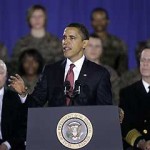
<img class="alignleft size-thumbnail wp-image-6691" title="obama-lejeune1" src="http://s3.media.squarespace.com/production/497390/6637584/wp-content/uploads/obama-lejeune1-150x150.jpg" alt="obama-lejeune1" width="150" height="150" /><em>Update: <a href="http://www.alternet.org/waroniraq/129362/all_troops_out_by_2011_not_so_fast%3B_why_obama%27s_iraq_speech_deserves_a_second_look/" target="_blank">Jeremy Scahill</a> offers a related, pessimistic analysis on AlterNet. <a href="http://lynch.foreignpolicy.com/posts/2009/02/27/obama_gets_it_right_on_iraq" target="_blank">Marc Lynch</a> is much more hopeful.
</em>

"Intend to" as in <a href="http://enduringamerica.com/2009/02/27/text-obama-speech-on-iraq-withdrawal/" target="_blank">"I <em>intend to</em> remove all U.S. troops from Iraq by the end of 2011"</a>....

<a href="http://enduringamerica.com/2009/02/27/text-obama-speech-on-iraq-withdrawal/" target="_blank">With that statement</a>, President Obama apparently went beyond my immediate concern that some in the US Government were planning on <a href="http://enduringamerica.com/2009/02/26/just-to-repeat-50000-us-troops-in-iraqindefinitely/" target="_blank">the long-term stay of 50,000 American soldiers in the country</a>. With those two words, however, he left himself room for manoeuvre. Less positively, it is also room for the US military and its supporters to maintain its pressure for permanent bases in the area. That is the space that leading Democrats in Congress were trying to shut down last night; <a href="http://edition.cnn.com/2009/POLITICS/02/27/iraq.dems/index.html" target="_blank">as House Speaker Nancy Pelosi framed it</a>, "The remaining missions given to our remaining forces must be clearly defined and narrowly focused so that the number of troops needed to perform them is as small as possible."
<!--more-->
In that context, the headline of <a href="http://www.telegraph.co.uk/news/worldnews/northamerica/usa/barackobama/4864280/Barack-Obama-to-end-US-combat-operations-in-Iraq-by-2010.html" target="_blank">"the historic announcement"</a> of an 18-month timetable for withdrawal of US combat troops is peripheral. Whether it was 16 months (Obama's original plan), 23 months (the US military's counter), or 18 months (the political compromise) is tangential to the larger questions of the American political and military intentions.

Far more important is a passage in the speech that has received less media attention, <a href="http://www.washingtonpost.com/wp-dyn/content/article/2009/02/27/AR2009022703065_pf.html" target="_blank">except from The Washington Post</a>:
<blockquote>We must work with our friends and partners to establish a new framework that advances Iraq’s security and the region’s....Going forward, the United States will pursue principled and sustained engagement with all of the nations in the region, and that will include Iran and Syria.</blockquote>
As I've noted before, that was a formula put forward by <a href="http://www.usip.org/isg/iraq_study_group_report/report/1206/index.html" target="_blank">the Iraq Study Group in 2006</a> but rejected by the Bush Administration in favour of the military-first "surge": "The United States should immediately launch a new diplomatic offensive to build an international consensus for stability in Iraq and the region. This diplomatic effort should include every country that has an interest in avoiding a chaotic Iraq, including all of Iraq’s neighbors."

Obama's Iraq strategy is thus part of the wider engagement strategy his Administration has been pushing from Inauguration Day. On the one hand, that raises optimism that the discussions with Syria and Iran are not just token displays and could lead to the most productive American strategy in the "wider Middle East" in at least 30 years. On the other, the failure of that engagement now has serious consequences: if talks with Tehran and/or Damascus collapse, then Obama's "intention to" withdraw completely by the end of 2001 is in jeopardy.

Which brings up back to those 50,000 troops. The Iraq Study Group was clear: "The United States must not make an open-ended commitment to keep large numbers of American troops deployed in Iraq." That recommendation, however, ran up against an earlier Bush Administration strategy of maintaining an indefinite presence in the country, not primarily for Iraqi stability, but to maintain a "preponderance of power" over rivals such as Syria and Iran and to ensure control of energy resources. Some in the US military, and their supporters outside Government, are still wedded to that vision.

That, of course, is a prospect which is not welcomed by many folks in Tehran or Damascus, let alone the political elite in Baghdad. So the irony is that the frontline of Obama's Iraq plan is not in Iraq but in the wider region. Watch the manoeuvres of those who are hostile to any engagement not only because they don't like "rogue states" (and, in some cases, are committed to an Israel-first approach) but because they want to maintain a platform for US permanent bases in Iraq. And watch for the response of the Obama Administration --- the longer it sustains a serious commitment to the regional dialogue advocated in 2006, the more likely it is that the President's "intend to" becomes a reality.]]></summary></entry><entry><title>Barack Obama is Not Muslim. He's the Anti-Christ. Or Maybe Hitler.</title><category term="Antichrist"/><category term="Barack Obama"/><category term="Conservapedia"/><category term="Hitler"/><category term="Islam"/><category term="Political Humour"/><category term="US Politics"/><id>http://www.enduringamerica.com/february-2009/2009/2/28/barack-obama-is-not-muslim-hes-the-anti-christ-or-maybe-hitl.html</id><link rel="alternate" type="text/html" href="http://www.enduringamerica.com/february-2009/2009/2/28/barack-obama-is-not-muslim-hes-the-anti-christ-or-maybe-hitl.html"/><author><name>Scott Lucas</name></author><published>2009-02-28T12:11:17Z</published><updated>2009-02-28T12:11:17Z</updated><summary type="html" xml:lang="en-US"><![CDATA[<a href="http://enduringamerica.com/2009/03/01/update-barack-obama-is-hitler-this-time-theyre-serious/" target="_blank"><em><strong>Related Post: Barack Obama is Hitler (This Time They’re Serious)</strong></em></a>

Our favourite on-line encyclopedia, Conservapedia, seems to be flagging in its quest to prove scientifically (creation-scientifically, not evolution-scientifically) that <a href="http://www.conservapedia.com/Barack_Hussein_Obama" target="_blank">President Barack Hussein Obama is a Muslim</a>. Their latest evidence, "He has said that 'Islam can be compatible with the modern world'", seems to be an even bigger stretch than the Man-Lived-Alongside-Dinosaurs-Museum in Kentucky.

Maybe the Conservapedians need to re-focus their efforts. The crack investigative journalists at <em>The Daily Show</em> are tracking evidence that the Leader of the Free World is in fact the 666 Fellow or the Not Very Nice German with the Tiny Moustache:

<!-- .cc_box a:hover .cc_home{background:url('http://www.comedycentral.com/comedycentral/video/assets/syndicated-logo-over.png') !important;}.cc_links a{color:#b9b9b9;text-decoration:none;}.cc_show a{color:#707070;text-decoration:none;}.cc_title a{color:#868686;text-decoration:none;}.cc_links a:hover{color:#67bee2;text-decoration:underline;} -->
<div class="cc_box" style="position:relative"><a style="display: inline; float: left; width: 60px; height: 31px;" href="http://www.comedycentral.com" target="_blank">
</a>
<div style="overflow: hidden; font-family: Arial,Helvetica,Verdana,sans-serif; font-style: normal; font-variant: normal; font-weight: bold; font-size: 10px; line-height: normal; font-size-adjust: none; font-stretch: normal; float: left; width: 299px; height: 31px; color: #707070;">
<div class="cc_show" style="overflow: hidden; position: relative; background-color: #e5e5e5; padding-left: 3px; height: 14px; padding-top: 2px;"><a href="http://www.thedailyshow.com/" target="_blank">The Daily Show With Jon Stewart</a><span style="position: absolute; top: 2px; right: 3px;">M - Th 11p / 10c</span></div>
<div class="cc_title" style="padding: 1px 3px 3px; overflow: hidden; font-size: 11px; color: #868686; background-color: #f5f5f5; line-height: 14px; height: 21px;"><a href="http://www.thedailyshow.com/video/index.jhtml?videoId=219482&amp;title=unusual-suspect" target="_blank">Unusual Suspect</a></div>
</div>
<object width="360" height="301" data="http://media.mtvnservices.com/mgid:cms:item:comedycentral.com:219482" type="application/x-shockwave-flash"><param name="bgcolor" value="#000000" /><param name="flashvars" value="autoPlay=false" /><param name="src" value="http://media.mtvnservices.com/mgid:cms:item:comedycentral.com:219482" /><param name="wmode" value="window" /><param name="allowfullscreen" value="true" /></object>
<div class="cc_links" style="float: left; clear: left; width: 358px; font-family: Arial,Helvetica,Verdana,sans-serif; font-style: normal; font-variant: normal; font-weight: normal; font-size: 10px; line-height: normal; font-size-adjust: none; font-stretch: normal; color: #b9b9b9; background-color: #f5f5f5;">
<div style="width: 177px; float: left; padding-left: 3px;"><a href="http://www.thedailyshow.com/full-episodes/index.jhtml" target="_blank">Daily Show Full Episodes</a>
<a href="http://www.comedycentral.com/shows/important_things/index.jhtml" target="_blank">Important Things With Demetri Martin</a></div>
<div style="width: 177px; float: left;"><a href="http://www.indecisionforever.com" target="_blank">Political Humor</a>
<a href="http://www.jokes.com" target="_blank">Joke of the Day</a></div>
</div>
</div>]]></summary></entry><entry><title>War on Terror Watch: Obama's Crew Trying, Failing to Halt Court Cases on Surveillance</title><category term="Al-Haramain Islamic Foundation"/><category term="Barack Obama"/><category term="Electronic Frontier Foundation"/><category term="Justice Department"/><category term="National Security Agency"/><category term="Surveillance"/><category term="US Courts"/><category term="US Politics"/><category term="War On Terror"/><id>http://www.enduringamerica.com/february-2009/2009/2/28/war-on-terror-watch-obamas-crew-trying-failing-to-halt-court.html</id><link rel="alternate" type="text/html" href="http://www.enduringamerica.com/february-2009/2009/2/28/war-on-terror-watch-obamas-crew-trying-failing-to-halt-court.html"/><author><name>Scott Lucas</name></author><published>2009-02-28T10:23:39Z</published><updated>2009-02-28T10:23:39Z</updated><summary type="html" xml:lang="en-US"><![CDATA[<img src="http://s3.media.squarespace.com/production/497390/6637584/wp-content/uploads/nsa.jpg" alt="nsa" title="nsa" width="135" height="135" class="alignleft size-full wp-image-6715" />Another episode in the Obama tale of "Not What We Say But What We Do" in the War on Terror:

On Friday, a US Circuit Court of Appeals <a href="http://www.latimes.com/news/nationworld/nation/la-na-wiretap28-2009feb28,0,110533.story" target="_blank">rejected the claim of Obama's Justice Department</a> that surveillance without warrants (if you prefer, "domestic spying"), a procedure extended by the Bush Administration, came under the category of "state secrets" and could not be reviewed by the courts.
<!--more-->
The case arose when Bush officials accidentally sent classified documents to the lawyers of a charity, the Al-Haramain Islamic Foundation, being investigated by the Treasury Department. The documents covered attorney-client discussions which were monitored by the National Security Agency.

In a second case, on Wednesday <a href="http://blog.wired.com/27bstroke6/2009/02/obama-adminis-1.html" target="_blank">Justice Department lawyers vigorously supported Congressional legislation</a> which granted full immunity to US telecommunications companies that participated in the Bush Administration's domestic surveillance programme.

The Electronic Frontier Foundation of San Francisco approached the US District Court to rule that the activity of the telecommunications companies was unconstitutional. Government lawyers responded, "[This] is the law of the land, and as such the Department of Justice defends it in court."

As a Senator of Illinois, Obama said he opposed the immunity clause but supported the bill for warrantless surveillance which included it.]]></summary></entry><entry><title>Withdrawal from Iraq? The Escape Clauses Begin</title><category term="American Enterprise Institute"/><category term="Christian Brose"/><category term="Committee for the Liberation of Iraq"/><category term="Danielle Pletka"/><category term="Iraq"/><category term="Jim Miklaszewski"/><category term="NBC"/><category term="Randy Schoenemann"/><category term="Status of Forces Agreement"/><category term="US Foreign Policy"/><category term="US Military Policy"/><category term="Washington Post"/><category term="Withdrawal"/><category term="foreign policy"/><id>http://www.enduringamerica.com/february-2009/2009/2/28/withdrawal-from-iraq-the-escape-clauses-begin.html</id><link rel="alternate" type="text/html" href="http://www.enduringamerica.com/february-2009/2009/2/28/withdrawal-from-iraq-the-escape-clauses-begin.html"/><author><name>Scott Lucas</name></author><published>2009-02-28T08:30:00Z</published><updated>2009-02-28T08:30:00Z</updated><summary type="html" xml:lang="en-US"><![CDATA[<a href="http://www.alternet.org/waroniraq/129362/all_troops_out_by_2011_not_so_fast%3B_why_obama%27s_iraq_speech_deserves_a_second_look/" target="_blank"><img class="alignleft size-full wp-image-6708" title="us-troops-iraq" src="http://s3.media.squarespace.com/production/497390/6637584/wp-content/uploads/us-troops-iraq.jpg" alt="us-troops-iraq" width="97" height="124" />NBC Pentagon correspondent Jim Miklaszeswki:</a> "Military commanders, despite this Status of Forces Agreement with the Iraqi government that all U.S. forces would be out by the end of 2011, are already making plans for a significant number of American troops to remain in Iraq beyond that 2011 deadline, assuming that Status of Forces Agreement agreement would be renegotiated. And one senior military commander told us that he expects large numbers of American troops to be in Iraq for the next 15 to 20 years."

<em><a href="http://www.washingtonpost.com/wp-dyn/content/article/2009/02/27/AR2009022702556_pf.html" target="_blank">The Washington Post:</a> </em> "[Obama] promised to 'proceed carefully' and 'consult closely' with military commanders and the Iraqi government, and he said 'there will surely be difficult periods and tactical adjustments'. Does that mean Mr. Obama is open to altering his plan if al-Qaeda or Iranian-backed militias rebound as U.S. troop levels decline?"

<!--more--><a href="http://www.washingtonpost.com/wp-dyn/content/article/2009/02/27/AR2009022702644.html" target="_blank">Randy Schoenemann, founder of Committee for the Liberation of Iraq, <em>Washington Post</em></a>: "[Obama's] plan features a longer timetable, commander flexibility, tactical adjustments and the presence of some 50,000 American troops for years....We should all hope President Obama continues to listen to Gens. David Petraeus and Ray Odierno, rebuffs his left-wing critics and stays the course with an Iraq policy John McCain might have formulated."

<a href="http://www.washingtonpost.com/wp-dyn/content/article/2009/02/27/AR2009022702644.html" target="_blank">Danielle Pletka, American Enterprise Institute:</a> "Will the residual force tasked with counterterrorism, training and force protection have accomplished its mission by the end of 2011?"

<a href="http://shadow.foreignpolicy.com/posts/2009/02/27/obamas_iraq_speech_brought_to_you_by_george_w_bush" target="_blank">Christian Brose, "Shadow Government" blog of <em>Foreign Policy</em></a>: "I just hope that if, God forbid, things take a turn for the worse in Iraq, Obama will find the same courage his predecessor did two years ago, and that he won't let inconvenient truths become the enemy of good strategy."]]></summary></entry><entry><title>Text: Obama Speech on Iraq Withdrawal</title><category term="Barack Obama"/><category term="Camp Lejeune"/><category term="Christopher Hill"/><category term="David Petraeus"/><category term="Dennis Ross"/><category term="George Mitchell"/><category term="Hillary Clinton"/><category term="Iraq"/><category term="Jonathan Yale"/><category term="Jordan Haerter"/><category term="Raymond Odierno"/><category term="Richard Holbrooke"/><category term="Ryan Crocker"/><category term="Saddam Hussein"/><category term="US Foreign Policy"/><category term="US Military Policy"/><category term="US Withdrawal"/><category term="al-Qaeda"/><id>http://www.enduringamerica.com/february-2009/2009/2/27/text-obama-speech-on-iraq-withdrawal.html</id><link rel="alternate" type="text/html" href="http://www.enduringamerica.com/february-2009/2009/2/27/text-obama-speech-on-iraq-withdrawal.html"/><author><name>Scott Lucas</name></author><published>2009-02-27T17:56:18Z</published><updated>2009-02-27T17:56:18Z</updated><summary type="html" xml:lang="en-US"><![CDATA[<img class="alignleft size-thumbnail wp-image-6683" title="obama-lejeune" src="http://s3.media.squarespace.com/production/497390/6637584/wp-content/uploads/obama-lejeune-150x150.jpg" alt="obama-lejeune" width="150" height="150" />Good morning Marines. Good morning Camp Lejeune. Good morning Jacksonville.  Thank you for that outstanding welcome. I want to thank Lieutenant General  Hejlik for hosting me here today.
<p align="left">I also want to acknowledge all of our soldiers, sailors, airmen  and Marines serving in Iraq and Afghanistan. That includes the Camp Lejeune  Marines now serving with – or soon joining – the Second Marine Expeditionary  Force in Iraq; those with Special Purpose Marine Air Ground Task Force in  Afghanistan; and those among the 8,000 Marines who are preparing to deploy to  Afghanistan. We have you in our prayers. We pay tribute to your service. We  thank you and your families for all that you do for America. And I want all of  you to know that there is no higher honor or greater responsibility than serving  as your Commander-in-Chief.<!--more--></p>
<p align="left">I also want to take this opportunity to acknowledge Ryan  Crocker, who recently completed his service as our Ambassador to Iraq.  Throughout his career, Ryan always took on the toughest assignments. He is an  example of the very best that this nation has to offer, and we owe him a great  debt of gratitude. He carried on his work with an extraordinary degree of  cooperation with two of our finest Generals – General David Petraeus, and  General Ray Odierno – who will be critical in carrying forward the strategy that  I will outline today.</p>
<p align="left">Next month will mark the sixth anniversary of the war in Iraq.  By any measure, this has already been a long war. For the men and women of  America’s armed forces – and for your families – this war has been one of the  most extraordinary chapters of service in the history of our nation. You have  endured tour after tour after tour of duty. You have known the dangers of combat  and the lonely distance of loved ones. You have fought against tyranny and  disorder. You have bled for your best friends and for unknown Iraqis. And you  have borne an enormous burden for your fellow citizens, while extending a  precious opportunity to the people of Iraq. Under tough circumstances, the men  and women of the United States military have served with honor, and succeeded  beyond any expectation.</p>
<p align="left">Today, I have come to speak to you about how the war in Iraq  will end.</p>
<p align="left">To understand where we need to go in Iraq, it is important for  the American people to understand where we now stand. Thanks in great measure to  your service, the situation in Iraq has improved. Violence has been reduced  substantially from the horrific sectarian killing of 2006 and 2007. Al Qaeda in  Iraq has been dealt a serious blow by our troops and Iraq’s Security Forces, and  through our partnership with Sunni Arabs. The capacity of Iraq’s Security Forces  has improved, and Iraq’s leaders have taken steps toward political  accommodation. The relative peace and strong participation in January’s  provincial elections sent a powerful message to the world about how far Iraqis  have come in pursuing their aspirations through a peaceful political process.</p>
<p align="left">But let there be no doubt: Iraq is not yet secure, and there  will be difficult days ahead. Violence will continue to be a part of life in  Iraq. Too many fundamental political questions about Iraq’s future remain  unresolved. Too many Iraqis are still displaced or destitute. Declining oil  revenues will put an added strain on a government that has had difficulty  delivering basic services. Not all of Iraq’s neighbors are contributing to its  security. Some are working at times to undermine it. And even as Iraq’s  government is on a surer footing, it is not yet a full partner – politically and  economically – in the region, or with the international community</p>
<p align="left">In short, today there is a renewed cause for hope in Iraq, but  that hope rests upon an emerging foundation.</p>
<p align="left">On my first full day in office, I directed my national security  team to undertake a comprehensive review of our strategy in Iraq to determine  the best way to strengthen that foundation, while strengthening American  national security. I have listened to my Secretary of Defense, the Joint Chiefs  of Staff, and commanders on the ground. We have acted with careful consideration  of events on the ground; with respect for the security agreements between the  United States and Iraq; and with a critical recognition that the long-term  solution in Iraq must be political – not military. Because the most important  decisions that have to be made about Iraq’s future must now be made by Iraqis.</p>
<p align="left">We have also taken into account the simple reality that America  can no longer afford to see Iraq in isolation from other priorities: we face the  challenge of refocusing on Afghanistan and Pakistan; of relieving the burden on  our military; and of rebuilding our struggling economy – and these are  challenges that we will meet.</p>
<p align="left">Today, I can announce that our review is complete, and that the  United States will pursue a new strategy to end the war in Iraq through a  transition to full Iraqi responsibility.</p>
<p align="left">This strategy is grounded in a clear and achievable goal shared  by the Iraqi people and the American people: an Iraq that is sovereign, stable,  and self-reliant. To achieve that goal, we will work to promote an Iraqi  government that is just, representative, and accountable, and that provides  neither support nor safe-haven to terrorists. We will help Iraq build new ties  of trade and commerce with the world. And we will forge a partnership with the  people and government of Iraq that contributes to the peace and security of the  region.</p>
<p align="left">What we will not do is let the pursuit of the perfect stand in  the way of achievable goals. We cannot rid Iraq of all who oppose America or  sympathize with our adversaries. We cannot police Iraq’s streets until they are  completely safe, nor stay until Iraq’s union is perfected. We cannot sustain  indefinitely a commitment that has put a strain on our military, and will cost  the American people nearly a trillion dollars. America’s men and women in  uniform have fought block by block, province by province, year after year, to  give the Iraqis this chance to choose a better future. Now, we must ask the  Iraqi people to seize it.</p>
<p align="left">The first part of this strategy is therefore the responsible  removal of our combat brigades from Iraq.</p>
<p align="left">As a candidate for President, I made clear my support for a  timeline of 16 months to carry out this drawdown, while pledging to consult  closely with our military commanders upon taking office to ensure that we  preserve the gains we’ve made and protect our troops. Those consultations are  now complete, and I have chosen a timeline that will remove our combat brigades  over the next 18 months.</p>
<p align="left">Let me say this as plainly as I can: by August 31, 2010, our  combat mission in Iraq will end.</p>
<p align="left">As we carry out this drawdown, my highest priority will be the  safety and security of our troops and civilians in Iraq. We will proceed  carefully, and I will consult closely with my military commanders on the ground  and with the Iraqi government. There will surely be difficult periods and  tactical adjustments. But our enemies should be left with no doubt: this plan  gives our military the forces and the flexibility they need to support our Iraqi  partners, and to succeed.</p>

After we remove our combat brigades, our mission will change from combat to  supporting the Iraqi government and its Security Forces as they take the  absolute lead in securing their country. As I have long said, we will retain a  transitional force to carry out three distinct functions: training, equipping,  and advising Iraqi Security Forces as long as they remain non-sectarian;  conducting targeted counter-terrorism missions; and protecting our ongoing  civilian and military efforts within Iraq. Initially, this force will likely be  made up of 35-50,000 U.S. troops.

Through this period of transition, we will carry out further redeployments. And  under the Status of Forces Agreement with the Iraqi government, I intend to  remove all U.S. troops from Iraq by the end of 2011. We will complete this  transition to Iraqi responsibility, and we will bring our troops home with the  honor that they have earned.

As we responsibly remove our combat brigades, we will pursue the second part of  our strategy: sustained diplomacy on behalf of a more peaceful and prosperous  Iraq.

The drawdown of our military should send a clear signal that Iraq’s future is  now its own responsibility. The long-term success of the Iraqi nation will  depend upon decisions made by Iraq’s leaders and the fortitude of the Iraqi  people. Iraq is a sovereign country with legitimate institutions; America cannot  – and should not – take their place. However, a strong political, diplomatic,  and civilian effort on our part can advance progress and help lay a foundation  for lasting peace and security.

This effort will be led by our new Ambassador to Iraq – Chris Hill. From his  time in the Peace Corps, to his work in Kosovo and Korea, Ambassador Hill has  been tested, and he has shown the pragmatism and skill that we need right now.  He will be supported by the courageous and capable work of so many American  diplomats and aid workers who are serving in Iraq.

Going forward, we can make a difference on several fronts. We will work with the  United Nations to support national elections, while helping Iraqis improve local  government. We can serve as an honest broker in pursuit of fair and durable  agreements on issues that have divided Iraq’s leaders. And just as we will  support Iraq’s Security Forces, we will help Iraqi institutions strengthen their  capacity to protect the rule of law, confront corruption, and deliver basic  services.

Diplomacy and assistance is also required to help the millions of displaced  Iraqis. These men, women and children are a living consequence of this war and a  challenge to stability in the region, and they must become a part of Iraq’s  reconciliation and recovery. America has a strategic interest – and a moral  responsibility – to act. In the coming months, my administration will provide  more assistance and take steps to increase international support for countries  already hosting refugees; we’ll cooperate with others to resettle Iraqis facing  great personal risk; and we will work with the Iraqi government over time to  resettle refugees and displaced Iraqis within Iraq – because there are few more  powerful indicators of lasting peace than displaced citizens returning home.

Now, before I go any further, I want to take a moment to speak directly to the  people of Iraq.

You are a great nation, rooted in the cradle of civilization. You are joined  together by enduring accomplishments, and a history that connects you as surely  as the two rivers carved into your land. In years past, you have persevered  through tyranny and terror; through personal insecurity and sectarian violence.  And instead of giving in to the forces of disunion, you stepped back from a  descent into civil war, and showed a proud resilience that deserves respect.

Our nations have known difficult times together. But ours is a bond forged by  shared bloodshed, and countless friendships among our people. We Americans have  offered our most precious resource – our young men and women – to work with you  to rebuild what was destroyed by despotism; to root out our common enemies; and  to seek peace and prosperity for our children and grandchildren, and for yours.

There are those who will try to prevent that future for Iraq – who will insist  that Iraq’s differences cannot be reconciled without more killing. They  represent the forces that destroy nations and lead only to despair, and they  will test our will in the months and years to come. America, too, has known  these forces. We endured the pain of Civil War, and bitter divisions of region  and race. But hostility and hatred are no match for justice; they offer no  pathway to peace; and they must not stand between the people of Iraq and a  future of reconciliation and hope.

So to the Iraqi people, let me be clear about America’s intentions. The United  States pursues no claim on your territory or your resources. We respect your  sovereignty and the tremendous sacrifices you have made for your country. We  seek a full transition to Iraqi responsibility for the security of your country.  And going forward, we can build a lasting relationship founded upon mutual  interests and mutual respect as Iraq takes its rightful place in the community  of nations.

That leads me to the third part of our strategy –comprehensive American  engagement across the region.

The future of Iraq is inseparable from the future of the broader Middle East, so  we must work with our friends and partners to establish a new framework that  advances Iraq’s security and the region’s. It is time for Iraq to be a full  partner in a regional dialogue, and for Iraq’s neighbors to establish productive  and normalized relations with Iraq. And going forward, the United States will  pursue principled and sustained engagement with all of the nations in the  region, and that will include Iran and Syria.

This reflects a fundamental truth: we can no longer deal with regional  challenges in isolation – we need a smarter, more sustainable and comprehensive  approach. That is why we are renewing our diplomacy, while relieving the burden  on our military. That is why we are refocusing on al Qaeda in Afghanistan and  Pakistan; developing a strategy to use all elements of American power to prevent  Iran from developing a nuclear weapon; and actively seeking a lasting peace  between Israel and the Arab world. And that is why we have named three of  America’s most accomplished diplomats – George Mitchell, Dennis Ross and Richard  Holbrooke – to support Secretary Clinton and me as we carry forward this agenda.

Every nation and every group must know – whether you wish America good or ill –  that the end of the war in Iraq will enable a new era of American leadership and  engagement in the Middle East. And that era has just begun.

Finally, I want to be very clear that my strategy for ending the war in Iraq  does not end with military plans or diplomatic agendas – it endures through our  commitment to uphold our sacred trust with every man and woman who has served in  Iraq.

You make up a fraction of the American population, but in an age when so many  people and institutions have acted irresponsibly, you did the opposite – you  volunteered to bear the heaviest burden. And for you and for your families, the  war does not end when you come home. It lives on in memories of your fellow  soldiers, sailors, airmen and Marines who gave their lives. It endures in the  wound that is slow to heal, the disability that isn’t going away, the dream that  wakes you at night, or the stiffening in your spine when a car backfires down  the street.

You and your families have done your duty – now a grateful nation must do ours.  That is why I am increasing the number of soldiers and Marines, so that we  lessen the burden on those who are serving. And that is why I have committed to  expanding our system of veterans health care to serve more patients, and to  provide better care in more places. We will continue building new wounded  warrior facilities across America, and invest in new ways of identifying and  treating the signature wounds of this war: Post-Traumatic Stress Disorder and  Traumatic Brain Injury, as well as other combat injuries.

We also know that service does not end with the person wearing the uniform. In  her visits with military families across the country, my wife Michelle has  learned firsthand about the unique burden that your families endure every day. I  want you to know this: military families are a top priority for Michelle and me,  and they will be a top priority for my administration. We’ll raise military pay,  and continue providing quality child-care, job-training for spouses, and  expanded counseling and outreach to families that have known the separation and  stress of war. We will also heed the lesson of history – that those who fight in  battle can form the backbone of our middle class – by implementing a 21st  century GI Bill to help our veterans live their dreams.

As a nation, we have had our share of debates about the war in Iraq. It has, at  times, divided us as a people. To this very day, there are some Americans who  want to stay in Iraq longer, and some who want to leave faster. But there should  be no disagreement on what the men and women of our military have achieved.

And so I want to be very clear: We sent our troops to Iraq to do away with  Saddam Hussein’s regime – and you got the job done. We kept our troops in Iraq  to help establish a sovereign government – and you got the job done. And we will  leave the Iraqi people with a hard-earned opportunity to live a better life –  that is your achievement; that is the prospect that you have made possible.

There are many lessons to be learned from what we’ve experienced. We have  learned that America must go to war with clearly defined goals, which is why  I’ve ordered a review of our policy in Afghanistan. We have learned that we must  always weigh the costs of action, and communicate those costs candidly to the  American people, which is why I’ve put Iraq and Afghanistan into my budget. We  have learned that in the 21st century, we must use all elements of American  power to achieve our objectives, which is why I am committed to building our  civilian national security capacity so that the burden is not continually pushed  on to our military. We have learned that our political leaders must pursue the  broad and bipartisan support that our national security policies depend upon,  which is why I will consult with Congress and in carrying out my plans. And we  have learned the importance of working closely with friends and allies, which is  why we are launching a new era of engagement in the world.

The starting point for our policies must always be the safety of the American  people. I know that you – the men and women of the finest fighting force in the  history of the world – can meet any challenge, and defeat any foe. And as long  as I am your Commander-in-Chief, I promise you that I will only send you into  harm’s way when it is absolutely necessary, and provide you with the equipment  and support you need to get the job done. That is the most important lesson of  all – for the consequences of war are dire, the sacrifices immeasurable.

You know because you have seen those sacrifices. You have lived them. And we all  honor them.

“Semper Fidelis” – it means always being faithful to Corps, and to country, and  to the memory of fallen comrades like Corporal Jonathan Yale and Lance Corporal  Jordan Haerter. These young men enlisted in a time of war, knowing they would  face great danger. They came here, to Camp Lejeune, as they trained for their  mission. And last April, they were standing guard in Anbar. In an age when  suicide is a weapon, they were suddenly faced with an oncoming truck filled with  explosives. These two Marines stood their ground. These two Marines opened fire.  And these two Marines stopped that truck. When the thousands of pounds of  explosives detonated, they had saved fifty Marines and Iraqi police who would  have been in the truck’s path, but Corporal Yale and Lance Corporal Haerter lost  their own lives. Jonathan was 21. Jordan was 19.

In the town where Jordan Haerter was from, a bridge was dedicated in his name.  One Marine who traveled to the ceremony said: “We flew here from all over the  country to pay tribute to our friend Jordan, who risked his life to save us. We  wouldn’t be here without him.”

America’s time in Iraq is filled with stories of men and women like this. Their  names are written into bridges and town squares. They are etched into stones at  Arlington, and in quiet places of rest across our land. They are spoken in  schools and on city blocks. They live on in the memories of those who wear your  uniform, in the hearts of those they loved, and in the freedom of the nation  they served.

Each American who has served in Iraq has their own story. Each of you has your  own story. And that story is now a part of the history of the United States of  America – a nation that exists only because free men and women have bled for it  from the beaches of Normandy to the deserts of Anbar; from the mountains of  Korea to the streets of Kandahar. You teach us that the price of freedom is  great. Your sacrifice should challenge all of us – every single American – to  ask what we can do to be better citizens.

There will be more danger in the months ahead. We will face new tests and  unforeseen trials. But thanks to the sacrifices of those who have served, we  have forged hard-earned progress, we are leaving Iraq to its people, and we have  begun the work of ending this war.

Thank you, God Bless you, and God Bless the United States of America. Semper Fi.]]></summary></entry><entry><title>Selling the War: NATO's "Master Narrative" for Afghanistan</title><category term="Afghanistan"/><category term="NATO"/><category term="Wikileaks"/><id>http://www.enduringamerica.com/february-2009/2009/2/27/selling-the-war-natos-master-narrative-for-afghanistan.html</id><link rel="alternate" type="text/html" href="http://www.enduringamerica.com/february-2009/2009/2/27/selling-the-war-natos-master-narrative-for-afghanistan.html"/><author><name>Scott Lucas</name></author><published>2009-02-27T12:42:41Z</published><updated>2009-02-27T12:42:41Z</updated><summary type="html" xml:lang="en-US"><![CDATA[<img class="alignleft size-full wp-image-6674" title="nato" src="http://s3.media.squarespace.com/production/497390/6637584/wp-content/uploads/nato1.jpg" alt="nato" /><em>Update: <a href="https://secure.wikileaks.org/wiki/N1" target="_blank">Wikileaks has now decrypted and released four documents</a>, one of which is the Master Narrative, related to NATO "strategic communications.
</em>
I've just learned from a reader of <a href="http://file.sunshinepress.org:54445/nato-master-narrative-2008.pdf" target="_blank">an October 2008 NATO "Master Narrative"</a> for its Media Operations Center. Although it is almost five months ago, some of the "talking points" --- both in terms of policy and propaganda --- are still more than relevant.

Key points include:

1. "Afghanistan remains NATO’s number one priority. This is not an operation of choice, it is one of necessity. We are in Afghanistan for the long term under a United Nations mandate for as long as we are needed and welcomed by the Afghan people."

2. "The Afghan National Security Forces and ISAF are making progress on the ground. The militants* do not and cannot hold ground where they are challenged by ANSF [Afghanistan National Security Forces] and ISAF [International Security Assistance Force]."

*"Opposing Militant Forces" is the correct term but is not suitable for use with the media. Depending on the audience and the group being referred to, the phrases militants/insurgents/extremists/Taleban extremists/enemies of Afghanistan may be used.
<!--more-->
3. "NATO has the strategy and forces to succeed over time.<strong> If asked</strong>: However, we could achieve the mission much faster and more efficiently with more. To that end we are constantly re-assessing the capabilities required to achieve the political goal and to mitigate any shortfalls."

4. "NATO/ISAF fully respects the sovereignty of Pakistan. NATO/ISAF has every right, however, to address issues which might diminish security in Afghanistan, and put its military and civilian personnel at risk.

"<strong>Only if pressed</strong>: ISAF forces are frequently fired at from inside Pakistan, very close to the border. In some cases defensive fire is required, against specific threats. Wherever possible, such fire is pre-coordinated with the Pakistani military."

5. "Both the Government of the Islamic Republic of Afghanistan and the Government of the Islamic Republic of Iran repeatedly indicated that they will pursue the development of stable and trustful relations.

"Weapons with Iranian markings have been intercepted on Afghan territory. NATO/ISAF has no direct evidence of Iranian government involvement. NATO/ISAF is monitoring the situation."

6. "NOTE: The term 'compensation' is inappropriate and should not be used because it brings with it legal implications that do not apply. ISAF makes every effort to minimise the risk of any damage, injury or loss of life to civilians in the course of its operations in Afghanistan. NATO/ISAF deeply regrets the death or injury of any innocent civilian as a result of its operations."

7. "Jordan has requested not to be mentioned as an ISAF member state in the public domain."

<strong><a href="http://file.sunshinepress.org:54445/nato-master-narrative-2008.pdf" target="_blank">Read the report in full.....</a></strong>]]></summary></entry><entry><title>Today's Top Journalism: Torture is OK if It's Sunny</title><category term="Ben Leach"/><category term="Binyam Mohamed"/><category term="Daily Telegraph"/><category term="Guantanamo Bay"/><category term="Journalism &amp;amp; Media"/><category term="Torture"/><category term="War On Terror"/><id>http://www.enduringamerica.com/february-2009/2009/2/27/todays-top-journalism-torture-is-ok-if-its-sunny.html</id><link rel="alternate" type="text/html" href="http://www.enduringamerica.com/february-2009/2009/2/27/todays-top-journalism-torture-is-ok-if-its-sunny.html"/><author><name>Scott Lucas</name></author><published>2009-02-27T10:31:23Z</published><updated>2009-02-27T10:31:23Z</updated><summary type="html" xml:lang="en-US"><![CDATA[<img class="alignleft size-thumbnail wp-image-6666" title="binyam2" src="http://s3.media.squarespace.com/production/497390/6637584/wp-content/uploads/binyam2-150x150.jpg" alt="binyam2" width="150" height="150" />Today intrepid reporter Ben Leach of <em>The Daily Telegraph</em> <a href="http://www.telegraph.co.uk/news/newstopics/politics/lawandorder/4837171/Binyam-Mohamed-the-British-resident-released-from-Guantanamo-Bay-tells-friends-UK-is-too-cold.html" target="_blank">gives us the inside </a>story on a case involving torture, extraordinary rendition, and deprivation of basic human rights:

<em>Binyam Mohamed, the British resident released from US detention base Guantanamo Bay in Cuba, has told friends that Britain is too cold. </em>]]></summary></entry><entry><title>Mr Obama's War: Gareth Porter on the Afghanistan "Mini-Surge"</title><category term="Afghanistan"/><category term="Barack Obama"/><category term="Center for American Progress"/><category term="David McKiernan"/><category term="David Petraeus"/><category term="Gareth Porter"/><category term="Huffington Post"/><category term="Inter Press Service"/><category term="Jim Miklaszewski"/><category term="Joint Chiefs of Staff"/><category term="Lawrence Korb"/><category term="Lyndon Johnson"/><category term="Mike Mullen"/><category term="NBC"/><category term="Robert Gates"/><category term="Sam Stein"/><category term="US Foreign Policy"/><category term="US Military Policy"/><category term="Vietnam War"/><category term="Wall Street Journal"/><category term="Washington Post"/><category term="Zbigniew Brzezinski"/><id>http://www.enduringamerica.com/february-2009/2009/2/27/mr-obamas-war-gareth-porter-on-the-afghanistan-mini-surge.html</id><link rel="alternate" type="text/html" href="http://www.enduringamerica.com/february-2009/2009/2/27/mr-obamas-war-gareth-porter-on-the-afghanistan-mini-surge.html"/><author><name>Scott Lucas</name></author><published>2009-02-27T10:20:12Z</published><updated>2009-02-27T10:20:12Z</updated><summary type="html" xml:lang="en-US"><![CDATA[<div><em><img class="alignleft size-full wp-image-6662" title="us-troops-afghanistan" src="http://s3.media.squarespace.com/production/497390/6637584/wp-content/uploads/us-troops-afghanistan.jpg" alt="us-troops-afghanistan" width="125" height="94" />Gareth Porter, who is emerging as the best observer of the US military manoeuvres on Iraq and Afghanistan, looks <a href="http://www.alternet.org/waroniraq/128870/%27what_is_the_end_game%27%3A_why_obama_rejected_a_bigger_surge_in_afghanistan/" target="_blank">behind President Obama's eventual decision</a> to approve only part of the 30,000 extra troops request by US commanders for the Afghan War (Porter says 17,000 sent; we put the figure at just over 20,000). </em><em>While the President has apparently drawn the line with the military, Porter warns, "Obama now faces the prospect that the Joint Chiefs will renew their support for McKiernan's request for the remaining 13,000 troops next month." And he has an analogy which is just short of terrifying:
<blockquote>Both Obama's decision to agree to just over half of his field commander's request for additional troops and the broader strategic situation offer striking parallels with the decision by President Lyndon B. Johnson in April 1965 to approve 36,000 out of a 49,000 troop request for Vietnam.</blockquote>
 

</em>

<strong>'What is the End Game?': Why Obama Rejected a Bigger Surge in Afghanistan</strong>
Gareth Porter

President Barack Obama decided to approve only 17,000 of the 30,000 troops requested by Gen. David McKiernan, the top commander of U.S. and NATO troops in Afghanistan, and Gen. David Petraeus, the CENTCOM commander, after McKiernan was unable to tell him how they would be used, according to a White House source.
<!--more-->
But Obama is likely to be pressured by McKiernan and the Joint Chiefs to approve the remaining 13,000 troops requested after the completion of an Afghanistan-Pakistan policy review next month.

Obama's decision to approve just over half the full troop request for Afghanistan recalls a similar decision by President Lyndon B. Johnson to approve only part of the request for U.S. troop deployments in a parallel situation in the Vietnam War in April 1965 at a comparable stage of that war. Johnson reluctantly went along with the request for additional troops within weeks under pressure from both the field commander and the Joint Chiefs of Staff.

The request for 30,000 additional troops, which would bring the U.S. troop level in Afghanistan to more than 60,000, had been approved by the Joint Chiefs of Staff as well as by Defense Secretary Robert Gates before Obama's inauguration. A front-page story in the <em>Washington Post</em> Jan. 13 reported that Obama was ready to "sign off" on the deployment request.

On Jan. 30 Adm. Mike Mullen, the chairman of the Joint Chiefs, said between 20,000 and 30,000 more troops would "probably" be sent to Afghanistan and the figure would "tend toward the higher number of those two."

But on Feb. 9, Mullen indicated that the Pentagon would soon announce that three brigades, or about 16,000 troops, would be deployed to Afghanistan in the coming months.

What had changed in the nine days between those two statements, according to a White House source, was that Obama had called McKiernan directly and asked how he planned to use the 30,000 troops, but got no coherent answer to the question.

It was after that conversation that Obama withdrew his support for the full request.

The unsatisfactory response from McKiernan had been preceded by another military non-answer to an Obama question. At his meeting with Gates and the Joint Chiefs of Staff at the Pentagon Jan. 28, Obama asked the Joint Chiefs, "What is the end game?" in Afghanistan, and was told, "Frankly, we don't have one," according to a Feb. 4 report by NBC News Pentagon correspondent Jim Miklaszewski.

Obama had also learned by early February that earlier assurances from Petraeus of an accord with Kyrygistan on use of the base at Manas had been premature, and that the U.S. ability to supply troops in Afghanistan would be dependent on political accommodations with Russia and Iran.

The rationale from the military leadership for doubling the number of U.S. troops in Afghanistan, even without a strategy or a concept of how the war could end, had been to "buy time" for an effort to build up Afghan security forces, as indicated by Mullen's Jan. 30 remarks.

The 17,000 troops, on the other hand, presented the upper limit of what Obama had pledged to add in Afghanistan during the campaign, according to Lawrence Korb of the Center for American Progress, who was an adviser to Obama.

Korb told IPS that Obama's decision not to wait until the key strategic questions were clarified before sending any more troops was based on the belief that he had to signal both Afghans and Pakistanis that the United States was not getting out of Afghanistan, according to Korb. "There are a lot of people in both countries hedging their bets," said Korb.

McKiernan reminded reporters Wednesday that the 17,000 troops represent only about two-thirds of the number of troops he has requested. That complaint suggested that he had been given no assurance that the remainder of the troops would be approved after the policy review.

The <em>Wall Street Journal</em> quoted an administration official Wednesday as saying that the troop authorization addresses the "urgent near-term security needs on the ground," but "does not prejudge or limit the options of what the [Afghanistan] review may recommend when it's completed."

Obama may have become more wary of getting mired down in an unwinnable war in Afghanistan, despite his strong commitment to increasing troops to Afghanistan during the campaign.

Former national security adviser Zbigniew Brzezinski, on whom Obama has reportedly relied for advice on foreign policy, told Sam Stein of the <em>Huffington Post</em> Wednesday, "We have to decide more precisely what is the objective of our involvement. Because we are increasingly running the risk of getting bogged down both in Afghanistan and in Pakistan in pursuit of objectives which we are lacking the power to reach."

Brezinzski said the administration needed "very specific, narrow objectives".

Korb told IPS that the policy review will deal with political-diplomatic as well as military policy issues, including the option of seeking to incorporate at least elements of the insurgents into the government through negotiations. He recalled that Afghan President Hamid Karzai has been advocating negotiations with the Taliban for two years.

Both Obama's decision to agree to just over half of his field commander's request for additional troops and the broader strategic situation offer striking parallels with the decision by President Lyndon B. Johnson in April 1965 to approve 36,000 out of a 49,000 troop request for Vietnam.

Johnson's decision, like Obama's, was made against a background of rapid deterioration in the security situation, worry that the war would soon be lost if more U.S. troops were not deployed, and an unresolved debate over how the troops would be employed in South Vietnam. Some of Johnson's advisers still favored a strategy of protecting the key population centers, whereas the field commander, Gen. William Westmoreland, was calling for a more aggressive strategy of seeking out enemy forces.

Another parallel between the two situations is high-level concern that too many U.S. troops would provoke anti-U.S. sentiment. That was the primary worry of some of Johnson's advisers about the effect of deploying three divisions in South Vietnam.

Similarly, Gates said Dec. 14 he would be "very concerned" about deploying more than the 30,000 troops requested by McKiernan, because, "At a certain point, we get such a big footprint, we begin to look like an occupier." Gates repeated that point in Congressional testimony Jan. 27, in which he again stressed the failure of the Soviet Union with 120,000 troops.

McKiernan, on the other hand, said Wednesday, "There's always an inclination to relate what we're doing with previous nations," he said, adding, "I think that's a very unhealthy comparison."

Johnson was worried about sliding into an open-ended commitment to a war that could not be won. But two months later he gave in, against his better judgment, to a request from Gen. William Westmoreland, the commander in Vietnam, for "urgent reinforcements". The escalation of the war continued for another two years.

Obama now faces the prospect that the Joint Chiefs will renew their support for McKiernan's request for the remaining 13,000 troops next month. And if the full 30,000 troop increase proves to be insufficient, he is likely to face further requests later on for "urgent reinforcements."</div>]]></summary></entry><entry><title>Your Daily Update: What Exactly is Dennis Ross in Charge Of?</title><category term="Dennis Ross"/><category term="Gary Samore"/><category term="Hillary Clinton"/><category term="Iran"/><category term="Middle East &amp;amp; Iran"/><category term="National Security Council"/><category term="Puneet Talwar"/><category term="Richard Holbrooke"/><category term="Robert Einhorn"/><category term="State Department"/><category term="The Cable"/><category term="US Foreign Policy"/><category term="Vali Nasr"/><category term="William Burns"/><category term="foreign policy"/><id>http://www.enduringamerica.com/february-2009/2009/2/27/your-daily-update-what-exactly-is-dennis-ross-in-charge-of.html</id><link rel="alternate" type="text/html" href="http://www.enduringamerica.com/february-2009/2009/2/27/your-daily-update-what-exactly-is-dennis-ross-in-charge-of.html"/><author><name>Scott Lucas</name></author><published>2009-02-27T09:37:30Z</published><updated>2009-02-27T09:37:30Z</updated><summary type="html" xml:lang="en-US"><![CDATA[<img class="alignleft size-full wp-image-6658" title="ross3" src="http://s3.media.squarespace.com/production/497390/6637584/wp-content/uploads/ross3.jpg" alt="ross3" width="96" height="118" />In today's episode, we try to find Dennis' new office in the State Department, <a href="http://thecable.foreignpolicy.com/posts/2009/02/25/why_the_diplomats_are_having_a_hard_time_explaining_dennis_rosss_job" target="_blank">courtesy of The Cable blog </a>at <em>Foreign Policy</em> and ask if he is the now the Super-Envoy for Bahrain. Or Turkmenistan. Or maybe <a href="http://en.wikipedia.org/wiki/Duck_Soup" target="_blank">Sylvania</a>.

The State Department, bless them, is trying to reassure folks off-the-record that Ross --- despite the public efforts not to mention the I-word in the description of his duties --- has been really important in the review of Iran policy. He has been in discussions with Secretary of State Hillary Clinton and Undersecretary of State William Burns, who has been Washington's point man in talks about and with the Iranians, and the Department's staff.
<!--more-->
So far, so good. But then "sources" start bringing out other names. There's Puneet Talwar, the senior director on Iran, Iraq, and the Gulf for the National Security Council. Gary Samore, the NSC's nonproliferation coordinator, and Robert Einhorn, the likely Undersecretary of State for nonproliferation, are also in the mix. And maybe Vali Nasr, who is a specialist on Shiism and Iran but wound up as an advisor to Richard Holbrooke on Afghanistan and Pakistan, comes into play.

Let's not say too many cooks (or, heaven help, too many chiefs and not enough Indians), but the Ross episode --- while giving us lots of political chuckles --- indicates that President Obama's clear statement of "engagement" is in tension with a lack of coordination and clarity inside the Administration.

No great harm in that...yet. There's no real breakthrough possible until after June's Presidential election in Iran. The risk, however, is that the muddle at the State Department and beyond leaves the field open for the sniping critics who would like nothing better than fist-shaking at the "mullahs".]]></summary></entry><entry><title>President Obama's State of the Nation: As Good as The West Wing?</title><category term="Aaron Sorkin"/><category term="Barack Obama"/><category term="Franklin D. Roosevelt"/><category term="John Matlin"/><category term="Josiah Bartlet"/><category term="Publius"/><category term="The West Wing"/><category term="US Economy"/><category term="US Politics"/><id>http://www.enduringamerica.com/february-2009/2009/2/27/president-obamas-state-of-the-nation-as-good-as-the-west-win.html</id><link rel="alternate" type="text/html" href="http://www.enduringamerica.com/february-2009/2009/2/27/president-obamas-state-of-the-nation-as-good-as-the-west-win.html"/><author><name>Scott Lucas</name></author><published>2009-02-27T09:22:16Z</published><updated>2009-02-27T09:22:16Z</updated><summary type="html" xml:lang="en-US"><![CDATA[<img src="http://s3.media.squarespace.com/production/497390/6637584/wp-content/uploads/obama2.jpg" alt="obama2" title="obama2" width="129" height="86" class="alignleft size-full wp-image-6655" /><em>Two days after the Presidential election, John Matlin ("Publius") posted <a href="http://enduringamerica.com/2008/11/06/obamas-state-of-the-union-message-an-advance-copy/" target="_blank">an advance copy of Barack Obama's "State of the Union" message</a>. Even though the Tuesday speech to Congress was labelled as "State of the Nation", John wasn't far off the mark with sentences like "Americans have faced dark days before. Using our ingenuity, know-how, willingness to work and sheer strength of character, we have won through." </em>

Here is his assessment of the "real" State of the Nation statement by President Obama:

In one of those peculiarities of political protocol, Obama’s speech on Tuesday night to a joint session of Congress was “a Presidential address”, not a State of the Union message. Leaving aside the technical argument for constitutional lawyers --- did the President fulfil his obligations under Article II, Section 3 to “give to the Congress information of the State of the Union”? --- the better analogy might be that Obama gave the American equivalent of the Queen’s Speech to the British Parliament. This was an ambitious legislative programme, but it had little or no detail.
<!--more-->
Sometimes observers of US Presidential politics allow themselves flights of fancy. In discussions of who is the best post-World War II Presidents, or indeed any president since 1865, Franklin D. Roosevelt invariably comes top. Since the 1990s, however, the name of Josiah Bartlet has always been high in the rankings. For those unfamiliar with US politics or culture, Bartlet was never one of the 43 men in the White House, but he did play the President on TV in <em>The West Wing</em>.

Both CNN and the New York Times have claimed that Obama’s speech harked back to the days of FDR and Lyndon Johnson, but it had many elements of vintage Jed Bartlet. Martin Sheen, Bartlet's alter ego, might have coached Obama in style and delivery --- at no time did Obama look like he was not in control of this American set-piece drama. Further, Obama’s suggestion that during the next decade, a cure for cancer will be found is, virtually, a direct lift from Series 3 of <em>The West Wing</em>. The only difference is that, at the last minute, President Bartlet decided it was step too far, even for him or scriptwriter Aaron Sorkin.

There is nothing wrong in an administration seeking a cure for cancer. It is a brilliant initiative. After all, one in three people in the West will suffer from the disease at some time in their lives. However, should not Obama have disclosed what resources he will put towards the goal?

Equally important, there are research institutes all over the world who are focused on bringing about the same result. Why not make it an aim for all such institutes to work together? Obama knows the subject is complex and there will be no single cure for all cancers. A combined effort might bring about speedier and less expensive solutions.

Obama pulled no punches in his speech. He proposed an activist government and busy legislative programme, presumably in an effort to position himself as a national leader in the face of continued Republican opposition. He directed much of his venom at the banks and bankers. However, his bromide about not spending a dollar of tax money on bankers was hollow. Bankers will be paid for their work, whether Obama likes it or not.

Obama brought vital issues of the budget deficits, dependence on foreign oil, global warming, the rising cost of healthcare, and the decline in education forward as matters of urgency, both for his administration and the American people. It is proper for him to do so. Previous administrations, dating back to Reagan, have in many respects either caused the problems or behaved like ostriches.

As usual, the devil will be in the detail. Some of the answers to questions of policy detail will be provided in the administration’s budget proposals published. It will be valuable to compare those proposals with Obama’s vision for America.]]></summary></entry></feed>