<?xml version="1.0" encoding="UTF-8"?>
<!--Generated by Squarespace V5 Site Server v5.13.156 (http://www.squarespace.com) on Sun, 19 May 2013 09:17:19 GMT--><feed xmlns="http://www.w3.org/2005/Atom" xmlns:dc="http://purl.org/dc/elements/1.1/"><title>Archives: September 2010</title><subtitle>Archives: September 2010</subtitle><id>http://www.enduringamerica.com/september-2010/</id><link rel="alternate" type="application/xhtml+xml" href="http://www.enduringamerica.com/september-2010/"/><link rel="self" type="application/atom+xml" href="http://www.enduringamerica.com/september-2010/atom.xml"/><updated>2010-09-12T10:17:28Z</updated><generator uri="http://five.squarespace.com/" version="Squarespace V5 Site Server v5.13.156 (http://www.squarespace.com)">Squarespace</generator><entry><title>Iran Urgent Analysis: Judiciary Overrules Ahmadinejad --- Release of US Detainee Shourd Delayed</title><category term="Abbas Jafari Doulatabadi"/><category term="Ali Larijani"/><category term="Ayatollah Ali Khamenei"/><category term="Esfandiar Rahim-Mashai"/><category term="Iran"/><category term="Iranian Labor News Agency"/><category term="Islamic Republic News Agency"/><category term="Mahmoud Ahmadinejad"/><category term="Middle East &amp;amp; Iran"/><category term="Mohammad Sadegh Larijani"/><category term="Reuters"/><category term="Sarah Shourd"/><id>http://www.enduringamerica.com/september-2010/2010/9/10/iran-urgent-analysis-judiciary-overrules-ahmadinejad-release.html</id><link rel="alternate" type="text/html" href="http://www.enduringamerica.com/september-2010/2010/9/10/iran-urgent-analysis-judiciary-overrules-ahmadinejad-release.html"/><author><name>Scott Lucas</name></author><published>2010-09-10T19:57:51Z</published><updated>2010-09-10T19:57:51Z</updated><summary type="html" xml:lang="en-US"><![CDATA[<a href="http://s3.media.squarespace.com/production/497390/7931327/wp-content/uploads/SHOURD.jpg"><img class="alignleft size-full wp-image-37661" title="SHOURD" src="http://s3.media.squarespace.com/production/497390/7931327/wp-content/uploads/SHOURD.jpg" alt="" width="168" height="126" /></a><em>UPDATED 2100 GMT: President Ahmadinejad's office has just issued <a href="http://irna.com/html/1389/13890620/267610.htm" target="_blank">a brief statement</a></em><em>, via the Islamic Republic News Agency, that the release of the "American spy" Sarah Shourd has been delayed.</em>
<p style="text-align: center;"><strong><em><a href="http://enduringamerica.com/2010/09/11/iran-breaking-latest-on-detained-us-hiker-sarah-shourd/" target="_blank">LATEST Iran Breaking: Latest on Detained US Hiker Sarah Shourd</a></em></strong></p>
The release of Sarah Shourd, one of three US citizens picked up by Iranian authorities in July 2009 while hiking near the Iraq-Iran border, <a href="http://www.reuters.com/article/idUSTRE6894O820100910" target="_blank">has been delayed</a>.

<a href="http://www.ilna.ir/newsText.aspx?ID=147207" target="_blank">An Iranian Labor News Agency story</a> quotes Tehran Prosecutor General Abbas Jafari Doulatabadi, in what appears to have been a sudden, late-night intervention (after 11 p.m. Tehran time), "Because the legal procedure on her case is not finished, her release is canceled."

The release was supposed to take place at 9 a.m. Saturday at the Hafeziyeh of Saad Abad, a Presidential palace which has been the site of high-profile appearances of Mahmoud Ahmadinejad and visiting leaders.

Our snap analysis?

The Foreign Ministry and, more importantly, Mahmoud Ahmadinejad, pushed too hard and too fast on the release of Sarah Shourd. Not necessarily in the release itself --- that could be justified as a humanitarian gesture, given the end of Ramadan and Shourd's gender and poor health --- but in its presentation.

<!--more-->Initially the freeing of Shourd was to take place in a hotel in north Tehran, probably as a low-key handover to Swiss officials, who represent US diplomatic interests in Iran. Then, however, the plans changed: the ceremony was now going to take place in the Presidential palace at Saad Abad, the site of Mahmoud Ahmadinejad's public appearances with foreign leaders.-

At the same time, the Foreign Ministry --- which had recently been at odds with the President but which wanted the release of at least one US detainee as a diplomatic move --- put out the message that Ahmadinejad deserved the credit for Shourd's release.

So now a low-key freeing of the detainee had become a high-profile showpiece for the President. A showpiece on 11 September, with all that date means, and thus a clear signal of accommodation with the US. A showpiece which in itself was the warm-up act for Ahmadinejad's trip to New York and the United Nations later this month. (Remember, the wider context is Ahmadinejad's desire to return to uranium enrichment talks with Washington via the 5+1 powers.)

That was too much for both Larijanis, Speaker of Parliament Ali and head of judiciary Sadegh. The two, already manoeuvring vis-a-vis the President over authority in a dispute which had been escalating in recent weeks, did not want Ahmadinejad to take the glory and thus the political legitimacy of spearheading Shourd's release. (A bit of recent history: in 2007, 15 British sailors were held for weeks in Tehran after supposedly straying into Iranian waters. Although Ali Larijani was central to the discussions that brought their release, it was Ahmadinejad who presided over a choreographed ceremony and gift-giving to the sailors as they were freed.)

And there was an added bit of distaste for Ahmadinejad's critics. Word was getting out that the "high officials" who were to appear at this suddenly-arranged very public ceremony might included the President's controversial and widely-disliked Chief of Staff, Esfandiar Rahim-Mashai.

So, at the last minute, on the Iranian weekend and after most of the media had gone to sleep, Sadegh Larijani's judiciary moved. The Foreign Ministry and the Presidency had no right intervening in a judicial matter. Shourd's release would have to be considered by the proper authorities, i.e., Iran's courts.

At least for this moment, that sudden move has prevailed.

Meanwhile, where is the Supreme Leader, the supposed authority in Iran's system? The apparent answer tonight is that he had been off to the side of all this drama. With Ahmadinejad's speed in raising the profile of Shourd's release and with the judiciary's sudden counter-attack, there has been no space for Ayatollah Khamenei to intervene. And, if he were to do so right now, he risks putting himself in the centre of a rather nasty fight between the heads of his three branches of Government. So the Supreme Leader's best move may be just to sit back and hope his politicians can find some face-saving accommodation.]]></summary></entry><entry><title>The Latest from Iran (10 September): Khamenei Takes the Pulpit</title><category term="Advar-e Tahkim Vahdat"/><category term="Ahmad Ghabel"/><category term="Ali Jamali"/><category term="Ali Larijani"/><category term="Arjang Davoudi"/><category term="Ayatollah Ahmad Jannati"/><category term="Ayatollah Ali Khamenei"/><category term="Ayatollah Ali Mohammad Dastgheib"/><category term="Ayatollah Hossein-Ali Montazeri"/><category term="Ayatollah Nasser Makarem-Shirazi"/><category term="Ayatollah Yusuf Sane'i"/><category term="Dissected News"/><category term="Eid al-Fitr"/><category term="Esfandiar Rahim-Mashai"/><category term="Fars News"/><category term="Habibollah Peyman"/><category term="Hashemi Rafsanjani"/><category term="Hassan Firouzabadi"/><category term="Heshmatollah Tabarzadi"/><category term="Hillary Clinton"/><category term="Hussein Ali Zadeh"/><category term="Iran"/><category term="Iranian Labor News Agency"/><category term="Israel"/><category term="James Miller"/><category term="Keyhan"/><category term="Khabar Online"/><category term="Khodnevis"/><category term="Linde Group"/><category term="LyondellBasell"/><category term="Mahmoud Ahmadinejad"/><category term="Masoud Mirkazemi"/><category term="Middle East &amp;amp; Iran"/><category term="Mohammad Reza Rahimi"/><category term="Nasrine Sotoudeh"/><category term="Nezam Hassanpour"/><category term="Pakistan"/><category term="Palestine"/><category term="Qods Day"/><category term="Rah-e-Sabz"/><category term="Ramin Mehmanparast"/><category term="Reuters"/><category term="Sarah Shourd"/><id>http://www.enduringamerica.com/september-2010/2010/9/10/the-latest-from-iran-10-september-khamenei-takes-the-pulpit.html</id><link rel="alternate" type="text/html" href="http://www.enduringamerica.com/september-2010/2010/9/10/the-latest-from-iran-10-september-khamenei-takes-the-pulpit.html"/><author><name>Scott Lucas</name></author><published>2010-09-10T13:06:04Z</published><updated>2010-09-10T13:06:04Z</updated><summary type="html" xml:lang="en-US"><![CDATA[<a href="http://s3.media.squarespace.com/production/497390/7931327/wp-content/uploads/IRAN-FLAG-TORN.jpg"><img class="alignleft size-full wp-image-22013" title="IRAN FLAG TORN" src="http://s3.media.squarespace.com/production/497390/7931327/wp-content/uploads/IRAN-FLAG-TORN.jpg" alt="" width="127" height="91" /></a>1945 GMT: The Detained Americans. We have urgently updated the news and offered a snap anlaysis of the <a href="http://enduringamerica.com/2010/09/10/iran-breaking-release-of-us-detainee-sarah-shourd-delayed/" target="_blank">postponement of the release of detained US citizen Sarah Shourd</a>. She was supposed to be freed ina ceremony in Tehran tomorrow morning.

1720 GMT: Eid al-Fitr Round-Up (cont. --- 1519 GMT). <em>Rah-e-Sabz</em> claims that in Najafabad the ceremony of followers of Grand Ayatollah Montazeri, who died last December, <a href="http://www.rahesabz.net/story/23211/" target="_blank">was much better attended</a> than the Government's gathering.

Green Movement followers also attended Ayatollah Sane'i's ceremony in his office in Qom. The cerlic declared, "Our committment to Eid al-Fitr should be that we should divert from yesterday's wrong path, which dishonoured Islam or its principles, and do everything to compensate. Everyone who took the problematic way yesterday, causing injustice for people, should know that he will be punished on Doomsday."
<p style="text-align: center;"><strong><em><a href="http://enduringamerica.com/2010/09/10/iran-breaking-release-of-us-detainee-sarah-shourd-delayed/" target="_blank">NEW Iran Urgent Analysis: Judiciary Overrules Ahmadinejad — Release of US Detainee Shourd Delayed</a></em></strong>
<strong><em><a href="http://enduringamerica.com/2010/09/10/iran-document-fatemeh-hashemi-every-iranian-seeking-rights-is-green/" target="_blank">NEW Iran Interview: Fatemeh Hashemi “Every Iranian Seeking Rights is Green”</a></em></strong>
<strong><em><a href="http://enduringamerica.com/2010/09/09/iran-exclusive-the-escalating-battle-with-ahmadinejad/" target="_blank">Iran Exclusive: The Escalating Battle With Ahmadinejad</a></em></strong>
<strong><em><a href="http://enduringamerica.com/2010/09/09/iran-special-abdollah-momeni-writes-supreme-leader-about-his-detention-torture/" target="_blank">Iran Special: Abdollah Momeni Writes Supreme Leader About His Detention &amp; Torture</a></em></strong>
<strong><em><a href="http://enduringamerica.com/2010/09/09/iran-document-karroubi-siege-home-iranian-people-8-september/" target="_blank">Iran Document: Karroubi on the Siege of His Home and of the Iranian People (8 September)</a></em></strong>
<strong><em><a href="http://enduringamerica.com/2010/09/09/the-latest-from-iran-9-september-withstanding-the-siege/" target="_blank"> The Latest from Iran (9 September): US Hiker Shourd to Be Released</a></em></strong></p>
<em>Khodnevis</em>, under the headline, "Siege, prohibitions, and Threats", claims that <a href="http://tinyurl.com/396tukd" target="_blank">all Sunni ceremonies were forbidden</a> in Tehran. Security forces allegedly hung banners declaring, "The unifying Eid al-Fitr ceremonies will be held at Tehran University, led by Supreme Leader, leader of all Muslims of the world."

<!--more-->1710 GMT: Sanctions Watch. Another major European company --- the Linde Group of Germany, an engineering firm and one of the world’s biggest industrial gas suppliers --- <a href="http://blogs.wsj.com/source/2010/09/10/another-company-cuts-ties-with-iran/" target="_blank">has decided to cut ties</a>. Spokesman Uwe Wolfinger said the company recently decided “to stop our activities in Iran and with Iran completely”.

Dutch-based plastics and chemical firm LyondellBasell said just over two weeks ago that it was <a href="http://online.wsj.com/article/SB10001424052748703447004575449463727514380.html" target="_blank">ending business in Iran</a>.

1535 GMT: Political Prisoner Watch. More on the latest court hearing for journalist and activist Heshmatollah Tabarzadi....

Tabarzadi, whose lawyer Nasrine Sotoudeh was detained last Saturday, <a href="http://www.rahesabz.net/story/23198/" target="_blank">told the court</a>, "We did not topple the Shah to recreate the same situation. This court has no legal authority to judge accusations against me."

1519 GMT: Eid al-Fitr Round-Up. At the start of today, we wondered if today's Eid al-Fitr ceremonies, marking the end of Ramadan, would be a sign of support for the regime and Government. The results appear to be inconclusive.

Iranian media features <a href="http://tabnak.ir/fa/pages/?cid=119155" target="_blank">photographs of crowds in Tehran</a>. <em>Khabar Online</em> <a href="http://www.khabaronline.ir/news-91294.aspx" target="_blank">adds details</a>: more than 40,000 security forces and police were mobilised, <a href="http://www.khabaronline.ir/news-91293.aspx" target="_blank">700 taxis</a> and 6000 buses and vans  were organised for free fares to the ceremony. Two tons of dates were distributed. About 100 ambulances with 1000 personnel
were on hand.

In Bandar Abbas in southern Iran, the authorities appear to have chosen <a href="ttp://www.mehrnews.com/fa/newsdetail.aspx?NewsID=1148866" target="_blank">a dusty dockyard outside town</a>, possibly to avoid Green "interference". probably most of the praying people are poor rustabouts and their wives. <a href="http://www.mehrnews.com/fa/newsdetail.aspx?NewsID=1148850" target="_blank">Photos</a> show Mashhad's Imam Reza shrine was crowded, but Isfahan's Naghshe Jahan square was half-empty.

<em>Rah-e-Sabz</em> claims that s<span style="font-size: 13.3333px;">ecurity forces <a href="http://www.rahesabz.net/story/23203/" target="_blank">prevented the ceremony</a> in the house of Habibollah Peyman, the leader of an Islamic Socialist party.</span>

Ayatollah Sane'i <a href="http://www.parlemannews.ir/?n=13256" target="_blank">said in his sermon</a> that  "the evil-doer will be punished on earth as well" and warned, "Whoever took the wrong road yesterday by doing injustice to people, should take a better road today." In what one EA correspondents sees as a tacit apology for acts of the past 31 years, he continued, "If we did injustice yesterday, believing it would help us to stay in power, know that no one will stay with the help of injustice."

In Shiraz, Ayatollah Dastgheyb --- prevented from speaking last Friday by a pro-regime crowd ---  <a href="http://www.rahesabz.net/story/23193/" target="_blank">told his audience</a> to "beware of doomsday and the devil" and commanded, "Don't allow anything in the name of Basij [militia] and upholding clerical rule."

1435 GMT: Diplomatic Move? Georges Malbrunot claims at <em>Le Figaro</em> that Hussein Ali Zadeh, a counselor at the Iranian Embassy in Finland, is <a href="http://enduringamerica.com/wp-admin/post.php?action=edit&amp;post=40701&amp;message=1" target="_blank">leaving his post</a> to support the Green Movement. The decision will supposedly be announced in the next few hours.

Earlier this year Iranian diplomats in Norway and Japan resigned their positions in sympathy with the demands of the opposition.

1425 GMT: Political Prisoner Watch. Protester Nezam Hassanpour <a href="http://chrr.biz/spip.php?article11017" target="_blank">has been sentenced</a> to six years in prison.

1350 GMT: Kiss and Make Up? It appears that the imminent release of detained US hiker Sarah Shourd might be the occasion for a reconciliation between President Ahmadinejad and the Foreign Ministry.

<a href="http://mehrnews.com/fa/newsdetail.aspx?NewsID=1148999" target="_blank">Foreign Ministry spokesman Ramin Mehmanparast said</a> that the freeing of Shourd was made possible by the President's efforts.

Tension between Ahmadinejad and his diplomats had risen because of the President's appointment of four special envoys, with Foreign Minister Manouchehr Mottaki only withdrawing hisresignation after the intervention of the Supreme Leader's office..

1300 GMT: Execution Watch. Lecturer and author Ahmad Ghabel has been summoned to answer questions in Revolutionary Guard. Ghabel claims this was prompted by his revelation, upon release from Mashhad Prison, of <a href="http://www.kaleme.com/1389/06/19/klm-31491" target="_blank">mass executions in that facility</a>.

1120 GMT: Economy Watch. In a jab at the Government, Grand Ayatollah Makarem-Shirazi has said that the official statistics for inflation <a href="http://www.ilna.ir/newsText.aspx?ID=147162" target="_blank">do not match up</a> with what Iran's people are experiencing.

1115 GMT: Today's All-Is-Not-Well Alert. Iran's Minister of Oil Masoud Mirkazemi has been proclaming this week that the country is now self-sufficient in gasoline production.

He may want to have a word with Iran's statisticians. Latest figures indicate that <a href="http://zamaaneh.com/news/2010/09/post_14292.html" target="_blank">gasoline imports rose 135%</a> in the first five months of the Iranian year (March-August).

0903 GMT: Converting the US message. This was the statement from US Secretary of State Hillary Clinton at the Council on Foreign Relations on Wednesday: "It is definitely our policy to support freedom and human rights inside Iran, and we have done so by speaking out. We have done so by trying to equip Iranians with the tools, particularly the technology tools that they need, to be able to communicate with each other to make their views known."

And here is how it is presented in <em>Fars News</em>: "<a href="http://www.farsnews.com/newstext.php?nn=8906190211" target="_blank">US Confession of Efforts to Support the Insurrection in Iran</a>".

0900 GMT: Unity? Before his sermon, the Supreme Leader <a href="http://www.irna.ir/html/1389/13890619/267137.htm" target="_blank">met with Iranian officials</a>. An EA correspondent reports two notable absentees: the head of the Guardian Council, Ahmad Jannati, and former President Hashemi Rafsanjani.

0830 GMT: Authority Re-Asserted? The official outlet Islamic Republic News Agency does have wall-to-wall coverage of the Eid al-Fitr ceremonies, but much of the message seems tangential or diversionary.

IRNA carries <a href="http://www.irna.ir/html/1389/13890618/267220.htm" target="_blank">the official statement from President Ahmadinejad's website</a> to the heads of Islamic countries, calling for the strengthening of unity and friendship amongst all nations based on monotheism.

But any reference to Iran's own affairs has to come indirectly through "<a href="http://www.irna.ir/html/1389/13890619/267154.htm" target="_blank">All Have Come</a>", a short item and photo noting the attendance of "all authorities", such as Ahmadinejad, Speaker of Parliament Ali Larijani, former President Hashemi Rafsanjani, Guardian Council head Ahmad Jannati, 1st Vice President Mohammad Reza Rahimi, and the head of Iran's armed forces, General Hassan Firouzabadi.

0815 GMT: Authority Re-Asserted? The Supreme Leader <a href="http://www.presstv.ir/detail/141918.html" target="_blank">has led prayers for Eid al-Fitr</a>, marking the end of the holy month of Ramadan, at Tehran University.

A week ago, the regime tried to establish its leadership of the people through the commemoration of Qods (Palestine) Day. That effort quickly receded into disappointment, with little evidence of a mass response. On that occasion, however, the lead speaker was President Ahmadinejad. So could Ayatollah Khamenei's camp be hoping that the claim of velayat-e-faqih (clerical authority) had a greater influence than that of the current Government's legitimacy?

Press TV's report on the Khamenei sermon focuses on the Supreme Leader's denunciation of  direct Israel-Palestine talks as "a cover-up for Israeli crimes against the Palestinian nation". Khamenei said:
<blockquote>The United States and the West just sit back and watch the suppression of the Palestinian nation, and yet they arrange talks for peace, what peace? Between which people?...Tyrants wish to push the Palestinian issue to a corner however a strong turnout at the annual International Quds Day rallies indicates motivation and hope among Muslims worldwide.</blockquote>
The Supreme Leader also referred to <a href="http://www.irna.ir/html/1389/13890619/267210.htm" target="_blank">the need to help those suffering from Pakistan's floods</a>.

Hmm, we'll keep reading but the re-assertion of last Friday's message and the denunciation of the US and Zionist does not seem to address the internal issues or even bolster the Government. There is no follow-up coverage of note on Press TV's broadcast.

Meanwhile, there is a shot across the Supreme Leader's bow. Ayatollah Sane'i, a prominent critic of the Government and even Khamenei, <a href="http://www.tahavolesabz.com/item/6627" target="_blank">has declared</a> that the Iranian people can properly commemorate Eid al-Fitr by remaining at home rather than coming out to hear clerics.

0710 GMT: The US Detainees. We're looking for further developments on <a href="http://enduringamerica.com/2010/09/09/the-latest-from-iran-9-september-withstanding-the-siege/" target="_blank">yesterday's news</a> that Tehran will release Sarah Shourd, one of three US hikers detained in July 2009 along the Iraq-Iran border, on Saturday.

Meanwhile, James Miller of <em>Dissected News</em> <a href="http://www.dissectednews.com/2010/09/why-iran-may-release-u-s-hiker.html" target="_blank">assesses the possible Iranian motives</a> behind the move: "[This] may be the perfect excuse to save face during Iran’s ongoing political limbo."

0605 GMT: Political Prisoner Watch. <a href="http://enduringamerica.com/2010/09/06/iran-witness-political-prisoner-arjang-davoudi-from-evin-on-human-rights-2008/" target="_blank">Arjang Davoudi</a>, nearing the 60th day of his hunger strike in <a href="http://enduringamerica.com/2010/09/06/iran-witness-political-prisoner-arjang-davoudi-from-evin-on-human-rights-2008/" target="_blank">Rajai Shahr Prison</a>, <a href="http://chrr.biz/spip.php?article11007" target="_blank">has vowed to continue it</a> after a meeting with his wife.

Davoudi demanded that phone calls and visits to the prison return to normal, that the position of the prison's head be addressed, andthat his house confiscated by the judiciary be returned to his wife.

Ali Jamali, a member of the alumni organisation Advar-e Tahkim Vahdat, <a href="http://www.rahesabz.net/story/23168/" target="_blank">is reported to be in solitary confinement</a>, three weeks after his detention.]]></summary></entry><entry><title>US and Afghanistan: The Little Inconvenience of Corruption (Miller)</title><category term="Afghanistan"/><category term="C Christine Fair"/><category term="Greg Miller"/><category term="John Kerry"/><category term="Kabul Bank"/><category term="Washington Post"/><id>http://www.enduringamerica.com/september-2010/2010/9/10/us-and-afghanistan-the-little-inconvenience-of-corruption-mi.html</id><link rel="alternate" type="text/html" href="http://www.enduringamerica.com/september-2010/2010/9/10/us-and-afghanistan-the-little-inconvenience-of-corruption-mi.html"/><author><name>Scott Lucas</name></author><published>2010-09-10T11:38:37Z</published><updated>2010-09-10T11:38:37Z</updated><summary type="html" xml:lang="en-US"><![CDATA[<em><a href="http://s3.media.squarespace.com/production/497390/7931327/wp-content/uploads/AFGHAN-CURRENCY-300x250.jpg"><img class="alignleft size-medium wp-image-40740" title="AFGHAN CURRENCY" src="http://s3.media.squarespace.com/production/497390/7931327/wp-content/uploads/AFGHAN-CURRENCY-300x250.jpg" alt="" width="134" height="112" /></a>Last month we featured articles which pointed not only to the problem of corruption within Afghanistan but to <a href="http://enduringamerica.com/2010/09/05/afghanistan-new-us-line-maybe-some-corruption-isnt-bad-jaffe/" target="_blank">a political battle within the US Government</a> over the issue, with some agencies accusing others of turning a blind eye to and even accepting the diversion of money. This week we noted <a href="http://enduringamerica.com/2010/09/09/afghanistan-the-politics-of-the-kabul-bank-crisis-ellickfilkins/" target="_blank">the politics behind the near-collapse of the Kabul Bank</a>.</em>

<em><a href="http://www.washingtonpost.com/wp-dyn/content/article/2010/09/09/AR2010090906828.html" target="_blank">Greg Miller now writes in The Washington Post</a>:</em>

In the span of several months, U.S.-backed investigative teams have assembled alarming evidence of rampant corruption in Afghanistan and the extent to which it reaches the highest ranks of that nation's government.
<p style="text-align: center;"><strong><em><a href="http://enduringamerica.com/2010/09/10/afghanistan-petraeus-success-undone-by-rising-casualties-porter/" target="_blank">Afghanistan: Petraeus “Success” Undone by Rising Casualties? (Porter)</a></em></strong></p>
But the American effort to increase Afghanistan's capacity to combat corruption has also had unintended consequences, aggravating the U.S. relationship with Afghan President Hamid Karzai and producing embarrassing revelations that have undermined attempts to build popular trust in the government in Kabul - a key component of the Obama administration's counterinsurgency campaign.

<!--more-->After pouring more resources into the anti-corruption effort over the past 18 months - including teams of advisers and sophisticated wiretapping technology - administration officials said there is growing concern that rooting out graft is paradoxically reinforcing perceptions that the problem is endemic.

"Our big push to help build Afghan institutions for transparency and anti-corruption has had the dismaying effect of bringing a lot of stuff to light that has sparked political crises," said a senior administration official. "Afghan institutions are growing more capable" of fighting corruption, the official said. But their work has the potential to "set us back."

The quandary in many ways reflects the extent to which the U.S. government has operated at cross-purposes in Afghanistan, doling out vast sums of money to win over warlords and buy security for military convoys, then cracking down on abuse in a system awash in American cash.

After nearly nine years of nation-building in Afghanistan, experts said, the U.S. government faces mounting evidence that it has helped to assemble one of the most corrupt governments in the world.

"I don't know how you can disaggregate the way in which [the U.S. government] has funneled money into Afghanistan from the crisis of corruption that presents itself today," said C. Christine Fair, an assistant professor at Georgetown University's School of Foreign Service who has monitored the U.S. role in Afghanistan. "We are a government at odds with ourselves."

Underscoring the Obama administration's sensitivity on the subject, officials persuaded Senate Foreign Relations Committee Chairman John F. Kerry (D-Mass.) to block the release of a report on corruption in Afghanistan that the panel's staff completed last month. Kerry had publicly mentioned that the report was coming. An administration official said the concern was about sensitive information contained in the document, but others blamed fears that its release would lead to further embarrassment for the U.S. government and Karzai.

There is no authoritative estimate of the toll that corruption has taken on the Afghan economy, which is sustained to a large extent by billions of dollars in American aid, as well as profits from drug trafficking.

U.S. officials acknowledge that they are still struggling to plug large leaks. An estimated $1 billion a year, for example, is <a href="http://www.washingtonpost.com/wp-dyn/content/article/2010/08/20/AR2010082004049.html?nav=emailpage">leaving the country in bags of cash carried out of Kabul airport</a>. Authorities suspect that much of the outflow is diverted foreign aid....

<strong><em><a href="http://www.washingtonpost.com/wp-dyn/content/article/2010/09/09/AR2010090906828.html" target="_blank">Read rest of article....</a></em></strong>]]></summary></entry><entry><title>Afghanistan: Petraeus "Success" Undone by Rising Casualties? (Porter)</title><category term="Afghanistan"/><category term="David Petraeus"/><category term="Gareth Porter"/><category term="Inter Press Service"/><category term="Joint IED Defeat Organization"/><category term="Julian Barnes"/><category term="Matthew Rosenberg"/><category term="Michael Johnson"/><category term="Wall Street Journal"/><id>http://www.enduringamerica.com/september-2010/2010/9/10/afghanistan-petraeus-success-undone-by-rising-casualties-por.html</id><link rel="alternate" type="text/html" href="http://www.enduringamerica.com/september-2010/2010/9/10/afghanistan-petraeus-success-undone-by-rising-casualties-por.html"/><author><name>Scott Lucas</name></author><published>2010-09-10T07:42:47Z</published><updated>2010-09-10T07:42:47Z</updated><summary type="html" xml:lang="en-US"><![CDATA[<em><a href="http://s3.media.squarespace.com/production/497390/7931327/wp-content/uploads/PETRAEUS2.jpg"><img class="alignleft size-full wp-image-40723" title="PETRAEUS" src="http://s3.media.squarespace.com/production/497390/7931327/wp-content/uploads/PETRAEUS2.jpg" alt="" width="131" height="130" /></a><a href="http://ipsnews.net/news.asp?idnews=52776" target="_blank">Gareth Porter writes for Inter Press Service</a>:</em>

General David Petraeus claimed limited success this week in the war within a war over the Taliban's planting of roadside bombs, but official Pentagon data shows the Taliban clearly winning that war by planting more bombs and killing many more U.S. and NATO troops since the troop surge began in early 2010.

In an interview with the <em>Wall Street Journal</em> published Tuesday, Petraeus asserted that the use of improvised explosive devices (IEDs) by the Taliban had "flattened" over the past year and attributed that alleged success to pressures by the U.S. military, and especially the increased tempo of Special Operations Forces raids against Taliban units.
<p style="text-align: center;"><strong><em><a href="http://enduringamerica.com/2010/09/09/afghanistan-the-politics-of-the-kabul-bank-crisis-ellickfilkins/" target="_blank">Afghanistan: The Politics of the Kabul Bank Crisis (Ellick/Filkins)</a></em></strong></p>
Data provided by the Pentagon's Joint IED Defeat Organization (JIEDDO), however, shows that IEDs planted by Afghan insurgents killed nearly 40 percent more U.S. and NATO troops in the first eight months of 2010 than in the comparable period of 2009.

<!--more-->The data also show that Taliban IEDs wounded 2,025 U.S. and NATO troops in the first eight months of this year –-- almost twice the 1,035 wounded in the same months last year.

In the <em>Journal</em> interview, Petraeus said that the data on violent incidents in Afghanistan indicate a slowly improving security situation.

Without putting his statement in quotation marks, Journal reporters Julian E. Barnes and Matthew Rosenberg reported Petraeus as claiming that the use of IEDs "has generally flattened in the past year". While crediting U.S. military operations with this alleged improvement, Petraeus said it is too soon to say that they are the sole reason for this alleged flattening of IED incidents.

But the data for 2009 and 2010 provide no support for Petraeus's "flattened" description.

The 12-month moving average of IED incidents, provided in a report in July by the Center for Strategic and International Studies on the basis of JIEDDO data, shows a continuing and sharp increase from 250 in June 2009 to more than 900 in May 2010, for an average increase per month of 54 incidents.

The total number of IED incidents in Afghanistan began to rise steeply in March 2010 to a new high of 1,087 and then continued to climb to 1,128 in May and again to 1,258 in August.

In a related effort to spin the IED issue more favourably to the war effort, Maj. Michael G. Johnson, a spokesman for the International Security Assistance Force (ISAF) commanded by Petraeus, was quoted in a USA Today story published Tuesday as saying that there had been a "dip" in deaths and injuries from IEDs over the previous 12 weeks compared to the same period in 2009.

But the JIEDDO figures on deaths and injuries to U.S. and NATO forces from IEDs from June through August 2010 total 271 casualties --- a 30 percent increase over the total for those months a year ago....

<strong><em><a href="http://ipsnews.net/news.asp?idnews=52776" target="_blank">Read full article....</a></em></strong><em></em>]]></summary></entry><entry><title>Outsourcing War: Blackwater Uses 30 False Fronts for Government Contracts (Mazzetti/Risen)</title><category term="Blackwater"/><category term="Carl Levin"/><category term="Central Intelligence Agency"/><category term="Erik Prince"/><category term="Greystone"/><category term="James Risen"/><category term="Mark Mazzetti"/><category term="New York Times"/><category term="Paravant"/><category term="Paul Gimigliano"/><category term="US Foreign Policy"/><category term="US Politics"/><category term="XPG"/><category term="Xe"/><id>http://www.enduringamerica.com/september-2010/2010/9/10/outsourcing-war-blackwater-uses-30-false-fronts-for-governme.html</id><link rel="alternate" type="text/html" href="http://www.enduringamerica.com/september-2010/2010/9/10/outsourcing-war-blackwater-uses-30-false-fronts-for-governme.html"/><author><name>Scott Lucas</name></author><published>2010-09-10T07:09:01Z</published><updated>2010-09-10T07:09:01Z</updated><summary type="html" xml:lang="en-US"><![CDATA[<em><a href="http://s3.media.squarespace.com/production/497390/7931327/wp-content/uploads/BLACKWATER-300x210.jpg"><img class="alignleft size-medium wp-image-40718" title="BLACKWATER" src="http://s3.media.squarespace.com/production/497390/7931327/wp-content/uploads/BLACKWATER-300x210.jpg" alt="" width="134" height="94" /></a>Blackwater became one of the blackest names in the American intervention in Iraq from 2003. The company, which increasingly handled "security" in the country, was implicated in a series of killings of Iraqi civilians. Eventually, the firm changed its name to Xe.</em>

<em>However, the controversy does not seems to have affected Blackwater/Xe's profitable work for the US Government in areas such as Afghanistan. <a href="http://www.nytimes.com/2010/09/04/world/middleeast/04blackwater.html" target="_blank">Mark Mazzetti and James Risen report for The New York Times</a>:</em>

Blackwater Worldwide created a web of more than 30 shell companies or subsidiaries in part to obtain millions of dollars in American government contracts after the security company came under intense criticism for reckless conduct in Iraq, according to Congressional investigators and former Blackwater officials.

<!--more-->While it is not clear how many of those businesses won contracts, at least three had deals with the United States military or the Central Intelligence Agency, according to former government and company officials. Since 2001, the intelligence agency has awarded up to $600 million in classified contracts to Blackwater and its affiliates, according to a United States government official.

The Senate Armed Services Committee this week released a chart that identified 31 affiliates of Blackwater, now known as Xe Services. The network was disclosed as part of a committee’s investigation into government contracting. The investigation revealed the lengths to which Blackwater went to continue winning contracts after Blackwater guards killed 17 Iraqi civilians in Baghdad in September 2007. That episode and other reports of abuses led to criminal and Congressional investigations, and cost the company its lucrative security contract with the State Department in Iraq.

The network of companies --- which includes several businesses located in offshore tax havens --- allowed Blackwater to obscure its involvement in government work from contracting officials or the public, and to assure a low profile for any of its classified activities, said former Blackwater officials, who, like the government officials, spoke only on condition of anonymity.

Senator Carl Levin, the Michigan Democrat who is chairman of the Armed Services Committee, said in a statement that it was worth “looking into why Blackwater would need to create the dozens of other names” and said he had requested that the Justice Department investigate whether Blackwater officers misled the government when using subsidiaries to solicit contracts.

The C.I.A.’s continuing relationship with the company, which recently was awarded a $100 million contract to <a title="Times article" href="http://www.nytimes.com/2009/12/11/us/politics/11blackwater.html">provide security at agency bases in Afghanistan</a>, has drawn harsh criticism from some members of Congress, who argue that the company’s tarnished record should preclude it from such work. At least two of the Blackwater-affiliated companies, XPG and Greystone, obtained secret contracts from the agency, according to interviews with a half dozen former Blackwater officials.

A C.I.A. spokesman, Paul Gimigliano, said that Xe’s current duties for the agency were to provide security for agency operatives. Contractors “do the tasks we ask them to do in strict accord with the law; they are supervised by C.I.A. staff officers; and they are held to the highest standards of conduct” he said. “As for Xe specifically, they help provide security in tough environments, an assignment at which their people have shown both skill and courage.”

Congress began to investigate the affiliated companies last year, after the shooting deaths of two Afghans by Blackwater security personnel working for a subsidiary named Paravant, which had obtained Pentagon contracts in Afghanistan. <a title="Senate hearing transcript" href="http://frwebgate.access.gpo.gov/cgi-bin/getdoc.cgi?dbname=111_senate_hearings&amp;docid=f:57827.pdf">In a Senate hearing earlier this year</a>, Army officials said that when they awarded the contract to Paravant for training of the Afghan Army, they had no idea that the business was part of Blackwater.

While Congressional investigators have identified other Blackwater-linked businesses, it was not the focus of their inquiry to determine how much money from government contracts flowed through the web of corporations, especially money earmarked for clandestine programs. The former company officials say that Greystone did extensive work for the intelligence community, though they did not describe the nature of the activities. The firm was incorporated in Barbados for tax purposes, but had executives who worked at Blackwater’s headquarters in North Carolina.

The former company officials say that Erik Prince, the business’s founder, was eager to find ways to continue to handle secret work after the 2007 shootings in Baghdad’s Nisour Square and set up a special office to handle classified work at his farm in Middleburg, Va....]]></summary></entry><entry><title>Iran Interview: Faezeh Hashemi "Every Iranian Seeking Rights is Green"</title><category term="Barack Obama"/><category term="Faezeh Hashemi"/><category term="Foreign Policy Magazine"/><category term="Green Movement"/><category term="Hashemi Rafsanjani"/><category term="Iran"/><category term="Mahmoud Ahmadinejad"/><category term="Middle East &amp;amp; Iran"/><category term="Omid Memarian"/><id>http://www.enduringamerica.com/september-2010/2010/9/10/iran-interview-faezeh-hashemi-every-iranian-seeking-rights-i.html</id><link rel="alternate" type="text/html" href="http://www.enduringamerica.com/september-2010/2010/9/10/iran-interview-faezeh-hashemi-every-iranian-seeking-rights-i.html"/><author><name>Scott Lucas</name></author><published>2010-09-10T06:49:11Z</published><updated>2010-09-10T06:49:11Z</updated><summary type="html" xml:lang="en-US"><![CDATA[<a href="http://s3.media.squarespace.com/production/497390/7931327/wp-content/uploads/IRAN-GREEN55.jpg"><img class="alignleft size-full wp-image-25636" title="IRAN GREEN" src="http://s3.media.squarespace.com/production/497390/7931327/wp-content/uploads/IRAN-GREEN55.jpg" alt="" width="137" height="98" /></a><em>Faezeh Hashemi --- former member of Parliament, women's rights activists, and daughter of former President Hashemi Rafsanjani --- <a href="http://www.foreignpolicy.com/articles/2010/09/08/green_light" target="_blank">spoke with Omid Memarian for Foreign Policy magazine</a>:</em>

<strong>Foreign Policy</strong>:<strong> </strong>During the post-election protests last year, you were imprisoned for 24 hours and then released. Many believe that, if you were not the daughter of Ayatollah Hashemi Rafsanjani, you would still be in prison right now. How has it felt over the past year to see so many of your former colleagues remain in prison?

<strong>Faezeh Hashemi Rafsanjani:</strong> I, too, believe that I would not have been released had I not been Mr. Hashemi's daughter. It feels terrible to see individuals who have worked hard for this country for years put in prison without due legal process only for their attempts to stand up to injustice and for telling the truth. Likewise, [it feels terrible] to see those who are real criminals as rulers.

<!--more-->Presently, everything is upside down, wrong is right, the unjust pretend to be unjustly treated, those who aim to destroy the country and the religion call themselves servants of the nation. Imbeciles are at the top, and managers and the distinguished are in prison, or have been dismissed, or have had to flee the country. All of this would be painful for any Iranian who has a modicum of pride.

<strong>FP</strong>: Recently, Ahmadinejad has expressed interest in meeting with U.S. President Barack Obama. Considering his upcoming trip to the United States this month for the inaugural session of the U.N. General Assembly, do you think such a meeting might take place? And if so, how might this affect Iran's domestic politics?

<strong>FHR:</strong> Ahmadinejad should handle his own problems first. Even if his own fabricated statistics are reviewed, everyone can see that over the 30 years [since] the Iranian revolution, even during the Iran-Iraq War, Iran has never had such a sorry state of affairs. He destroys whatever he touches.

Whether the meeting takes place or not, I don't think anyone is waiting for any positive change in Iran's internal or foreign politics or putting too much hope on it.

<strong>FP</strong>: How do you think Iranian society has changed since the June 2009 presidential election?

<strong>FHR:</strong> The exuberance, hope, and excitement of the [post-election period] has given its place to depression and hopelessness. People see themselves face to face with lies, mismanagement, demagoguery, bullying, thuggery, injustice, destruction of national resources and wealth, loss of international opportunities, and further destruction of the country at the hands of the ruling group.

<strong>FHR:</strong> I think every Iranian who is in search of his or her rights, freedom, democracy, and the country's development belongs to this movement.

This is a peaceful civil movement. Respecting everyone's rights, even one's opponents'; avoiding tension and animosity through finding points of common interest; pursuing demands through consensus in whatever way everyone can --- these are some of the expectations of this movement....

<strong><em><a href="http://www.foreignpolicy.com/articles/2010/09/08/green_light" target="_blank">Read full article....</a></em></strong>]]></summary></entry><entry><title>US Politics: Florida Pastor Misunderstands "Sign from God", Postpones Burn-a-Koran Day</title><category term="David Petraeus"/><category term="Hillary Clinton"/><category term="Imam Muhammad Musri"/><category term="Park51 Islamic Cultural Center"/><category term="Robert Gates"/><category term="Terry Jones"/><category term="US Politics"/><id>http://www.enduringamerica.com/september-2010/2010/9/10/us-politics-florida-pastor-misunderstands-sign-from-god-post.html</id><link rel="alternate" type="text/html" href="http://www.enduringamerica.com/september-2010/2010/9/10/us-politics-florida-pastor-misunderstands-sign-from-god-post.html"/><author><name>Scott Lucas</name></author><published>2010-09-10T06:33:23Z</published><updated>2010-09-10T06:33:23Z</updated><summary type="html" xml:lang="en-US"><![CDATA[<a href="http://s3.media.squarespace.com/production/497390/7931327/wp-content/uploads/JONES-TERRY-300x225.jpg"><img class="alignleft size-medium wp-image-40708" title="JONES (TERRY)" src="http://s3.media.squarespace.com/production/497390/7931327/wp-content/uploads/JONES-TERRY-300x225.jpg" alt="" width="168" height="126" /></a>Headline developments in the US yesterday, as Terry Jones, the pastor of a small Florida church, said he was <a href="http://www.nytimes.com/2010/09/10/us/10obama.html" target="_blank">cancelling tomorrow's Burn-a-Koran Day</a> because he had a "sign from God" that the Park 51 Islamic Community Center, proposed on a site 2 1/2 blocks from the World Trade Center in New York City, would be moved.

Unfortunately, the line between God and Jones was a bit erratic, as the Islamic Center's organisers quickly said that they had made no such promise.
<p style="text-align: center;"><strong><em><a href="http://enduringamerica.com/2010/09/08/us-politics-video-clinton-denounces-disrespectful-disgraceful-burn-a-koran-day/" target="_blank">US Politics Video: Clinton Denounces “Disrespectful, Disgraceful” Burn-a-Koran Day</a></em></strong>
<strong><em><a href="http://enduringamerica.com/2010/09/07/us-and-afghanistan-petraeus-warning-over-burn-a-koran-day-barnesrosenberg/" target="_blank"> US and Afghanistan: Petraeus Warning over “Burn a Koran Day” (Barnes/Rosenberg)</a></em></strong></p>
Jones then said that he was only postponing his Koran burning.

<!--more-->Jones had made his cancellation announcement after a meeting with Imam Muhammad Musri, an Islamic leader in Florida. Although Musri was alongside Jones at the press conference, he soon said that Park 51's leaders had not agreed to find a new location: “The imam committed to meet with us but did not commit to moving the mosque yet.”

Jones also received a phone call from Defense Secretary Robert Gates during his meeting with Musri. Earlier in the day, President Obama had said the Koran burning would be "a recruitment bonanza from Al Qa'eda".

Throughout the week, Jones' plan had been denounced by US officials, including Hillary Clinton and General David Petraeus, the commander of American forces in Afghanistan, who said it would endanger his troops.]]></summary></entry><entry><title>The Latest from Iran (9 September): US Hiker Shourd to Be Released</title><category term="A Safe World for Women"/><category term="Abdollah Momeni"/><category term="Alireza Tabesh"/><category term="Ayatollah Ali Khamenei"/><category term="Chris Crowstaff"/><category term="Christiane Amanpour"/><category term="Esfandiar Rahim-Mashai"/><category term="European Union"/><category term="Haji Babaei"/><category term="Iran"/><category term="Javad Mahzadeh"/><category term="Javad Mansouri"/><category term="Josh Fattal"/><category term="Keyhan"/><category term="Mahmoud Ahmadinejad"/><category term="Mehdi Karroubi"/><category term="Middle East &amp;amp; Iran"/><category term="Mohammad-Hossein Saffar-Harandi"/><category term="Ramin Mehmanparast"/><category term="Sajad Ghaderzadeh"/><category term="Sakineh Mohammadi-Ashtiani"/><category term="Sarah Shourd"/><category term="Shane Bauer"/><id>http://www.enduringamerica.com/september-2010/2010/9/9/the-latest-from-iran-9-september-us-hiker-shourd-to-be-relea.html</id><link rel="alternate" type="text/html" href="http://www.enduringamerica.com/september-2010/2010/9/9/the-latest-from-iran-9-september-us-hiker-shourd-to-be-relea.html"/><author><name>Scott Lucas</name></author><published>2010-09-09T16:23:16Z</published><updated>2010-09-09T16:23:16Z</updated><summary type="html" xml:lang="en-US"><![CDATA[<a href="http://s3.media.squarespace.com/production/497390/7931327/wp-content/uploads/IRAN-GREEN55.jpg"><img class="alignleft size-full wp-image-25636" title="IRAN GREEN" src="http://s3.media.squarespace.com/production/497390/7931327/wp-content/uploads/IRAN-GREEN55.jpg" alt="" width="137" height="98" /></a>2055 GMT: Iran Confirms Shourd To Be Released. Iranian Foreign Ministry spokesman Ramin Mehmanparast <a href="http://www.presstv.ir/detail/141888.html" target="_blank">has just told Press TV</a>, "Given that Eid al-Fitr [the celebration of the end of Ramadan, occurring on Saturday] is upon us, it was decided that this lady (Sarah Shourd) should soon be released and rejoined with her family."

2045 GMT: The US Detainees. Chris Crowstaff of <em><a href="http://www.asafeworldforwomen.org/" target="_blank">A Safe World for Women</a></em>, which has campaigned for the three detained US hikers, has just provided a statement to EA:
<blockquote>I have just read reports that Sarah Shourd is to be released on Saturday. While the news fills me with joy, I also ask the Islamic Republic of Iran to be compassionate to her fiancé Shane Bauer and friend Josh Fattal and release them at the same time.

My heart also goes out to the families of other women imprisoned in Iran and ask the Iranian government to show the same compassion and benevolence to them.</blockquote>
<p style="text-align: center;"><strong><em><a href="http://enduringamerica.com/2010/09/09/iran-exclusive-the-escalating-battle-with-ahmadinejad/" target="_blank">NEW Iran Exclusive: The Escalating Battle With Ahmadinejad</a></em></strong>
<strong><em><a href="http://enduringamerica.com/2010/09/09/iran-special-abdollah-momeni-writes-supreme-leader-about-his-detention-torture/" target="_blank">NEW Iran Special: Abdollah Momeni Writes Supreme Leader About His Detention &amp; Torture</a></em></strong>
<strong><em><a href="http://enduringamerica.com/2010/09/09/iran-document-karroubi-siege-home-iranian-people-8-september/" target="_blank">NEW Iran Document: Karroubi on the Siege of His Home and of the Iranian People (8 September)</a></em></strong>
<strong><em><a href="http://enduringamerica.com/2010/09/08/iran-feature-re-visiting-the-2009-election-keshavarz/" target="_blank">Iran Feature: Re-visiting the 2009 Election (Keshavarz)</a></em></strong>
<strong><em><a href="http://enduringamerica.com/2010/09/08/iran-snap-analysis-who-is-running-foreign-policy/" target="_blank">Iran Snap Analysis: Who is Running Foreign Policy?</a></em></strong>
<strong><em><a href="http://enduringamerica.com/2010/09/08/the-latest-from-iran-8-september-who-leads-today/" target="_blank"> The Latest from Iran (8 September): Sakineh Execution Suspended?</a></em></strong></p>
1939 GMT: Hiker Shourd to Be Released? Journalist Christiane Amanpour, quoting the Iranian Mission to the United Nations, says <a href="http://www.twitter.com/camanpour" target="_blank">detained American Sarah Shourd will be released soon</a>.

Amanpour asked, "Today or tomorrow?" The delegation replied, "Very soon."

<!--more-->The Iranian spokesperson <a href="http://www.msnbc.msn.com/id/39078798/" target="_blank">gave the same message</a> to NBC News and <a href="http://www.twitter.com/cnnross" target="_blank">to CNN</a>.

1930 GMT: And on the Foreign Policy Front. Javad Mansouri, the former Iranian ambassador to China and Pakistan, <a href="http://www.kaleme.com/1389/06/18/klm-31435 " target="_blank">has repeated his criticism</a> of the President's appointment of four special envoys, declaring that Ahmadinejad must retreat or otherwise problems will rise. Mansouri added that Ahmadinejad's actions  prove his doubts in Foreign Ministry and show that he wants to take over foreign policy.

I suspect that Mansouri's opinions are not just his own but on behalf of colleagues who are still in the diplomatic service.

1920 GMT: The Battle Within. Over to Mohammad-Hossein Saffar-Harandi for <a href="http://www.khabaronline.ir/news-91168.aspx" target="_blank">today's shot at the Ahmadinejad camp</a>....

Saffar-Harandi, who was ousted as Minister of Culture in last summer's clashes within the Cabinet, tried to get a bit of payback today against Presidential Chief of Staff Esfandiar Rahim-Mashai. Saffar-Harandi said only "disturbed and ill minds" can propagate the "Iranian school", a reference to Rahim-Mashai's recent statement that other countries should follow Iran rather than Islam as a model.

The former Minister added, "We must follow strictly all of the Supreme Leader's words,;unity can only be centred around him."

1645 GMT: The US Detainees. An official at Iran's Ministry of Culture and Islamic Guidance has said that one of three US detainees, taken by Iranian forces in July 2009 when they allegedly walked across the Iraq-Iran border, <a href="http://news.blogs.cnn.com/2010/09/09/source-iran-will-release-one-u-s-hiker/" target="_blank">will be released Saturday</a>. This would coincide with Eid al-Fitr, the celebration of the end of the Islamic holy month of Ramadan.

The official said one of Iran's vice presidents will be present when the detainee is released at 9 a.m. local time.

Another US journalist is reporting that <a href="http://www.twitter.com/jimsciuttoABC" target="_blank">the freed hiker will be Sarah Shourd</a>. Shourd has reportedly been suffering from health problems.

The other two detainees are Shane Bauer and Josh Fattal.

1515 GMT: Political Prisoner Watch. Journalist and writer Javad Mahzadeh <a href="http://www.rahana.org/archives/24916" target="_blank">has been released</a> from detention after 11 months on $40,000 bail.

1255 GMT: Execution (Ashtiani) Watch. The European Union has said that a "suspension" of the death sentence against Sakineh Mohammadi Ashtiani, convicted of adultery, <a href="http://www.google.com/hostednews/ap/article/ALeqM5jHbiuIayXy7ZNeDmGw9sfU7PndXAD9I4BU3O0" target="_blank">is not enough</a> and that the penalty should be commuted.

1020 GMT: Execution (Sakineh) Watch. Sajad Ghaderzadeh, the son of Sakineh Mohammadi Ashtiani, <a href="http://edition.cnn.com/2010/WORLD/meast/09/09/iran.stoning/#fbid=PJTrOsOYGt8&amp;wom=false" target="_blank">has reacted</a> to <a href="http://enduringamerica.com/2010/09/08/the-latest-from-iran-8-september-who-leads-today/" target="_blank">yesterday's statement</a>, from the Iranian Foreign Ministry, that the execution of his mother on charges of adultery has been suspended. Ghaderzadeh said, ""We have so far not received an official and legal document on stopping the stoning sentence and execution, we therefore do not accept these claims.They must issue us legal documents in this regard."

The Foreign Ministry's statement said the process of sentencing for Ashtiani's conviction of complicity in the murder of her husband was continuing. Originally, the 43-year-old woman had been condemned to die by stoning on the adultery charge, but the method --- though not the death sentence --- was suspended earlier this summer.

0940 GMT: Exclusive. We have posted what we hope is a very special Iran Special, based on sources inside Iran, "<a href="http://enduringamerica.com/2010/09/09/iran-exclusive-the-escalating-battle-with-ahmadinejad/" target="_blank">The Escalating Battle With Ahmadinejad</a>".

0840 GMT: <em>Keyhan</em> v. Ahmadinejad. The "hard-line" <em>Keyhan</em> newspaper <a href="http://www.khabaronline.ir/news-90854.aspx " target="_blank">has had another go at the President's men</a>. It tells readers to beware of "intruders", for their mission is not only terror and bombings.

Who are those intruders? One might cast a glance at Keyhan's dislike of Ahmadinejad Chief of Staff Esfandiar Rahim-Mashai.

0830 GMT: Economy Watch. Amidst concerns over imports and their effect of Iranian agriculture, the <a href="http://www.aftabnews.ir/vdcaa0n6u49nwm1.k5k4.html" target="_blank">Ministry of Trade has announced</a> that rice coupons are being re-introduced, with the replacement of the imports by domestic rice.

Seven months into this Iranian year, the budget and statistics for last year still <a href="http://www.aftabnews.ir/vdcjyaevvuqeytz.fsfu.html" target="_blank">have not been published</a> by the Central Bank and Government. The suspicion is that the data is being withheld because it would reveal high Government debt, unpaid debts to Iranian banks, and a decline in builiding projects.

But never mind, for here is today's All-is-Well Alert. First Vice President Mohammad Reza Rahimi says, "Soon we will celebrate <a href="http://www.aftabnews.ir/vdchkqnzx23nvmd.tft2.html" target="_blank">all Iranians having a house of their own</a>."

0825 GMT: Parliament v. President. About 100 MPs have signed the demand for <a href="http://www.iran-emrooz.net/index.php?/news2/24122/" target="_blank">impeachment of Minister of Education Haji Babaei</a>. They claim that the ministry is on the verge of collapse, there is mismanagement of the budget, and they note protests against employment policies.

On another front, <a href="http://www.aftabnews.ir/vdci5yaz5t1auw2.cbct.html" target="_blank">an olive branch from Alireza Tabesh</a>. He said government representatives had approved changes to the 5th Budget Plan, and it will be approved by the Majlis Coordination Commission after discussion with the chamber of commerce, Strategic Research Centre, and the Audit Court.

Earlier this week, Ahmadinejad's representatives had boycotted a meeting of the Coordination Commission.

0810 GMT: Khamenei and Ahmadinejad. We note <a href="http://www.tehrantimes.com/Index_view.asp?code=226346" target="_blank">another message from the Supreme Leader to the President</a> in Ayatollah Khamenei's speech on Tuesday.

Behind the headline that Iran will defy international sanctions, there was not only a sign of weakness in the Supreme Leader's reference to Iran's "economic downturn". Khamenei also urged a “full, precise, comprehensive and continuous” implementation of Article 44 of the Constitution on privatisation of state companies: “Implementation of this article will resolve most of the problems.”

Those "problems", as noted by key MPs and the Supreme Audit Court, have included the sell-off of the majority of state firms (85% in one estimate) not to the private sector but to consortia including groups within the state, notably the Islamic Revolution Guards Corps.

Khamenei called on the government to “properly manage the country’s financial resources” and “improve business atmosphere”, he declared, "Excessive and illogical imports are a big danger.”

0725 GMT: We begin this morning with two features. We have posted the <a href="http://enduringamerica.com/2010/09/09/iran-document-karroubi-siege-home-iranian-people-8-september/" target="_blank">English translation of another statement of defiance from Mehdi Karroubi</a>, commenting on the siege of his home and of the Iranian people and putting the blame at the feet of the Government.

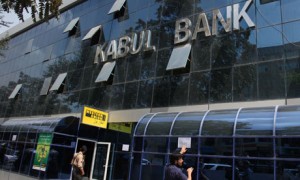
And we have published what we think is <a href="http://enduringamerica.com/2010/09/09/iran-special-abdollah-momeni-writes-supreme-leader-about-his-detention-torture/" target="_blank">an extraordinary letter</a>, as activist Abdollah Momeni, detained since June 2009, tries to tell the Supreme Leader of his detention and torture in Evin Prison.]]></summary></entry><entry><title>Afghanistan: The Politics of the Kabul Bank Crisis (Ellick/Filkins)</title><category term="Adam Ellick"/><category term="Afghanistan"/><category term="Dexter Filkins"/><category term="Hamid Karzai"/><category term="Haseen Fahim"/><category term="Kabul Bank"/><category term="Mahmoud Karzai"/><category term="Muhammad Qasim Fahim"/><id>http://www.enduringamerica.com/september-2010/2010/9/9/afghanistan-the-politics-of-the-kabul-bank-crisis-ellickfilk.html</id><link rel="alternate" type="text/html" href="http://www.enduringamerica.com/september-2010/2010/9/9/afghanistan-the-politics-of-the-kabul-bank-crisis-ellickfilk.html"/><author><name>Scott Lucas</name></author><published>2010-09-09T10:17:08Z</published><updated>2010-09-09T10:17:08Z</updated><summary type="html" xml:lang="en-US"><![CDATA[<em><a href="http://s3.media.squarespace.com/production/497390/7931327/wp-content/uploads/KABUL-BANK-300x180.jpg"><img class="alignleft size-medium wp-image-40683" title="KABUL BANK" src="http://s3.media.squarespace.com/production/497390/7931327/wp-content/uploads/KABUL-BANK-300x180.jpg" alt="" width="210" height="126" /></a>Adam Ellick and Dexter Filkins <a href="http://www.nytimes.com/2010/09/08/world/asia/08kabul.html" target="_blank">write for The New York Times</a>:</em>

In early 2009, as President Hamid Karzai scanned the landscape for potential partners to run in his re-election bid, he was approached from an unusual corner: a bank.

The president’s brother, Mahmoud, and another Afghan businessman, Haseen Fahim, were shareholders in Kabul Bank, one of the freewheeling financial institutions that had sprung up over the past decade since the <a title="More articles about the Taliban." href="http://topics.nytimes.com/top/reference/timestopics/organizations/t/taliban/index.html?inline=nyt-org">Taliban</a>’s fall.
<p style="text-align: center;"><strong><em><a href="http://enduringamerica.com/2010/09/08/afghanistan-a-new-way-forward-afghanistan-study-group/" target="_blank">Afghanistan: “A New Way Forward” (Afghanistan Study Group)</a></em></strong></p>
According to Afghan officials and businessmen in Kabul, Mahmoud Karzai and Mr. Fahim recommended Mr. Fahim’s brother, Gen. <a title="More articles about Muhammad Fahim." href="http://topics.nytimes.com/top/reference/timestopics/people/f/muhammad_fahim/index.html?inline=nyt-per">Muhammad Qasim Fahim</a>, to become the president’s running mate.

<!--more-->President Karzai agreed, and in a stroke co-opted his ethnic Tajik opposition and placated an old political foe with a checkered record on human rights and corruption. After the deal, Kabul Bank poured millions into Mr. Karzai’s re-election campaign, Afghan officials said. Mahmoud Karzai and Haseen Fahim, drawing on Kabul Bank’s resources, were able to enrich their families aided by tens of millions of dollars in loans.

Now, Kabul Bank sits at the center of a financial crisis that has exposed the shadowy workings of the country’s business and political elite, and how such connections shielded the bank from scrutiny. The panic surrounding Kabul Bank is threatening to pull down the Afghan banking system and has drawn in the United States. And it is driving a wedge between the Fahims and the Karzais, the two Afghan political families that benefited most. Now, the financial-familial arrangement is teetering on the edge of collapse.

“The brothers orchestrated the political deal to serve their business interests,” said a prominent Afghan businessman in Kabul who, like virtually everyone interviewed for this article, spoke only on condition of anonymity. “Fahim became vice president, and the bank financed Karzai’s re-election.

“In Kabul, politics is all about money,” he said. “It’s the same thing.”

<strong><em><a href="http://www.nytimes.com/2010/09/08/world/asia/08kabul.html" target="_blank">Read full article....</a></em></strong>]]></summary></entry><entry><title>Israel-Palestine: Time to Move Beyond a US-Centred Approach (Freeman)</title><category term="Anwar Sadat"/><category term="Barack Obama"/><category term="Charles Freeman"/><category term="Egypt"/><category term="Ehud Barak"/><category term="Gaza"/><category term="George Mitchell"/><category term="Hamas"/><category term="Iran"/><category term="Israel"/><category term="Jimmy Carter"/><category term="King Abdullah of Saudi Arabia"/><category term="Likud Party"/><category term="Middle East &amp;amp; Iran"/><category term="Norway"/><category term="Palesitne"/><category term="Yasser Arafat"/><id>http://www.enduringamerica.com/september-2010/2010/9/9/israel-palestine-time-to-move-beyond-a-us-centred-approach-f.html</id><link rel="alternate" type="text/html" href="http://www.enduringamerica.com/september-2010/2010/9/9/israel-palestine-time-to-move-beyond-a-us-centred-approach-f.html"/><author><name>Scott Lucas</name></author><published>2010-09-09T10:01:43Z</published><updated>2010-09-09T10:01:43Z</updated><summary type="html" xml:lang="en-US"><![CDATA[<a href="http://s3.media.squarespace.com/production/497390/7931327/wp-content/uploads/CLINTON-NETANYAHU-ABBAS-300x162.jpg"><img class="alignleft size-medium wp-image-40679" title="CLINTON NETANYAHU ABBAS" src="http://s3.media.squarespace.com/production/497390/7931327/wp-content/uploads/CLINTON-NETANYAHU-ABBAS-300x162.jpg" alt="" width="168" height="91" /></a><em>On 1 September, Charles Freeman --- former State Department and Defense Department official, US Ambassador to Saudi Arabia, and nominee in 2009 to head the National Intelligence Council --- delivered </em><a href="http://justworldnews.org/archives/Freeman-Norway-Sept-1-2010-b.htm" target="_blank"><em>this speech</em></a><em> to the Royal Norwegian Ministry of Foreign Affairs:</em>

You have asked me to speak to current American policies in the Middle East, with an emphasis on the prospects for peace in the Holy Land.  You have further suggested that I touch on the relationship of the Gulf Arabs, especially Saudi Arabia, to this.  It is both an honor and a challenge to address this subject in this capital/at this ministry.
<p style="text-align: center;"><strong><em><a href="http://enduringamerica.com/2010/09/09/us-foreign-policy-document-hillary-clinton-proclaims-american-leadership-for-decades-to-come-8-september/" target="_blank">Video &amp; Transcript: Hillary Clinton to Council on Foreign Relations “American Leadership for Decades to Come”</a></em></strong>
<strong><em><a href="http://enduringamerica.com/2010/09/08/israel-palestine-israels-security-summit-abbas-and-netanyahu-clash-on-core-issues/" target="_blank"> Israel-Palestine: Israel’s Security Summit, Abbas and Netanyahu Clash on Core Issues</a></em></strong></p>
The declaration of principles worked out in Oslo seventeen years ago was the last direct negotiation between Israelis and Palestinian Arabs to reach consequential, positive results.  The Oslo accords were a real step toward peace, not another deceptive pseudo-event in an endlessly unproductive, so-called “peace process.”  And if that one step forward in Oslo in 1993 was followed by several steps backwards, there is a great deal to be learned from how and why that happened.

<!--more-->There can be no doubt about the importance of today’s topic.  The ongoing conflict in the Holy Land increasingly disturbs the world’s conscience as well as its tranquility.  The Israel-Palestine issue began as a struggle in the context of European colonialism.  In the post-colonial era, tension between Israelis and the Palestinians they dispossessed became, by degrees, the principal source of radicalization and instability in the Arab East and then the Arab world as a whole.  It stimulated escalating terrorism against Israelis at home and their allies abroad.  Since the end of the Cold War, the interaction between Israel and its captive Palestinian population has emerged as the fountainhead of global strife.  It is increasingly difficult to distinguish this strife from a war of religions or a conflict of civilizations.<span style="font-size: 13.3333px;"> </span>

For better or ill, my own country, the United States has played and continues to play the key international part in this contest.  American policies, more than those of any other external actor, have the capacity to stoke or stifle the hatreds in the Middle East and to spread or reverse their infection of the wider world.  American policies and actions in the Middle East thus affect much more than that region.<span style="font-size: 13.3333px;"> </span>

Yet, as I will argue, the United States has been obsessed with <em>process </em>rather than substance.  It has failed to involve parties who are essential to peace.  It has acted on Israel’s behalf to preempt rather than enlist international and regional support for peace.  It has defined the issues in ways that preclude rather than promote progress.  Its concept of a “peace process” has therefore become the handmaiden of Israeli expansionism rather than a driver for peace.  There are alternatives to tomorrow’s diplomatic peace pageant on the Potomac.  And, as Norway has shown, there is a role for powers other than America in crafting peace in the Holy Land.<span style="font-size: 13.3333px;"> </span>

Over thirty years ago, at Camp David, Jimmy Carter pushed Israel through the door to peace that Egypt’s Anwar Sadat had opened.  Twenty years ago, the first Bush administration pressed Israel to the negotiating table with Palestinian leaders, setting the stage for their clandestine meetings in Oslo.  The capacity of the United States to rally other governments behind a cause that it espouses may have atrophied, but American power remains far greater than that of any other nation.  Nowhere is this more evident than in the Middle East.<span style="font-size: 13.3333px;"> </span>

For more than four decades, Israel has been able to rely on aid from the United States to dominate its region militarily and to sustain its economic prosperity.  It has counted on its leverage in American politics to block the application of international law and to protect itself from the political repercussions of its policies and actions.  Unquestioning American support has enabled Israel to put the seizure of ever more land ahead of the achievement of a modus vivendi with the Palestinians or other Arabs.  Neither violent resistance from the dispossessed nor objections from abroad have brought successive Israeli governments to question, let alone alter the priority they assign to land over peace.<span style="font-size: 13.3333px;"> </span>

Ironically, Palestinians too have developed a dependency relationship with America. This has locked them into a political framework over which Israel exercises decisive influence.  They have been powerless to end occupation, pogroms, ethnic cleansing, and other humiliations by Jewish soldiers and settlers.  Nor have they been able to prevent their progressive confinement in checkpoint-encircled ghettos on the West Bank and the great open-air prison of Gaza.<span style="font-size: 13.3333px;"> </span>

Despite this appalling record of failure, the American monopoly on the management of the search for peace in Palestine remains unchallenged.  Since the end of the Cold War, Russia – once a contender for countervailing influence in the region --- has lapsed into impotence.  The former colonial powers of the European Union, having earlier laid the basis for conflict in the region, have largely sat on their hands while ringing them, content to let America take the lead.  China, India, and other Asian powers have prudently kept their political and military distance.  In the region itself, Iran has postured and exploited the Palestinian cause without doing anything to advance it.  Until recently, Turkey remained aloof.

<span style="font-size: 13.3333px;">On rare occasions, as in the case of the 1973 Arab oil embargo, the Arabs have backed their verbal opposition to Israel with action.  Egypt and Jordan have settled into an unpopular coexistence with Israel that is now sustained only by U.S. subventions.  Saudi Arabia has twice taken the initiative to offer Israel diplomatic concessions if it were to conclude arrangements for peaceful coexistence with the Palestinians.  But, overall, Arab governments have earned the contempt of the Palestinians and their own people for their lack of serious engagement.  For the most part, Arab leaders have timorously demanded that America solve the Israel-Palestine problem for them, while obsequiously courting American protection against Israel, each other, Iran, and --- in some cases --- their own increasingly frustrated and angry subjects and citizens.</span>

<span style="font-size: 13.3333px;">Islam charges rulers with the duty to defend the faithful and to uphold justice.  It demands that they embody righteousness.  The resentment of mostly Muslim Arabs at their governing elites’ failure to meet these standards generates sympathy for terrorism directed not just at Israel but at both the United States and Arab governments associated with it.</span>

<span style="font-size: 13.3333px;">The perpetrators of the September 11, 2001, terrorist attack on the United States saw it in part as reprisal for American complicity in Israeli cruelties to Palestinians and other Arabs.  They justified it as a strike against Washington’s protection of Arab governments willing to overlook American contributions to Muslim suffering.  Washington’s response to the attack included suspending its efforts to make peace in the Holy Land as well as invading and occupying Afghanistan and Iraq.  All three actions inadvertently strengthened the terrorist case for further attacks on America and its allies.  The armed struggle between Americans and Muslim radicals has already spilled over to Pakistan, Yemen, Somalia, and other countries.  Authoritative voices in Israel now call for adding Iran to the list of countries at war with America.  They are echoed by Zionist and neo-conservative spokesmen in the United States.</span>

<span style="font-size: 13.3333px;">The widening involvement of Americans in combat in Muslim lands has inflamed anti-American passions and catalyzed a metastasis of terrorism.  It has caused a growing majority of the world’s 1.6 billion Muslims to see the United States as a menace to their faith, their way of life, their homelands, and their personal security.  American populists and European xenophobes have meanwhile undercut liberal and centrist Muslim arguments against the intolerance that empowers terrorism by equating terrorism and its extremist advocates with Islam and its followers.  The current outburst of bigoted demagoguery over the construction of an Islamic cultural center and mosque in New York is merely the most recent illustration of this.  It suggests that the blatant racism and Islamophobia of contemporary Israeli politics is contagious.  It rules out the global alliances against religious extremists that are essential to encompass their political defeat.</span><span style="font-size: 13.3333px;"> </span>

President Obama’s inability to break this pattern must be an enormous personal disappointment to him.  He came into office committed to crafting a new relationship with the Arab and Muslim worlds.  His first interview with the international media was with Arab satellite television.  He reached out publicly and privately to Iran.  He addressed the Turkish parliament with persuasive empathy.  He traveled to a great center of Islamic learning in Cairo to deliver a remarkably eloquent message of conciliation to Muslims everywhere.  He made it clear that he understood the centrality of injustices in the Holy Land to Muslim estrangement from the West.  He promised a responsible withdrawal from Iraq and a judicious recrafting of strategy in Afghanistan.  Few doubt Mr. Obama’s sincerity.  Yet none of his initiatives has led to policy change anyone can detect, let alone believe in.<span style="font-size: 13.3333px;"> </span>

It is not for me to analyze or explain the wide gaps between rhetoric and achievement in the Obama Administration’s stewardship of so many aspects of my country’s affairs.  American voters will render their first formal verdict on this two months from tomorrow, on the 2<sup>nd</sup> of November.  The situation in the Holy Land, Iraq, Afghanistan, and adjacent areas is only part of what they will consider as they do so.  But I do think it worthwhile briefly to examine some of the changes in the situation that ensure that many policies that once helped us to get by in the Middle East will no longer do this.

<span style="font-size: 13.3333px;">Let me begin with the “peace process”, a hardy perennial of America’s diplomatic repertoire that the Obama Administration will put back on public display tomorrow.  In the Cold War, the appearance of an earnest and “even-handed” American search for peace in the Holy Land was the price of U.S. access and influence in the Middle East.  It provided political cover for conservative Arab governments to set aside their anger at American backing of Israel so as to stand with America and the Western bloc against Soviet Communism.  It kept American relations with Israel and the Arabs from becoming a zero-sum game.  It mobilized domestic Jewish support for incumbent presidents.  Of course, there hasn’t been an American-led “peace process” in the Middle East for at least a decade.  Still the conceit of a “peace process” became an essential political convenience for all concerned.  No one could bear to admit that the “peace process” had expired.  It therefore lived on in phantom form.</span>

<span style="font-size: 13.3333px;">Even when there was no “peace process,” the possibility of resurrecting one provided hope to the gullible, cover to the guileful, beguilement for the press, an excuse for doing nothing to those gaining from the status quo, and – last but far from least –  lifetime employment for career “peace processors.”  The perpetual processing of peace without the requirement to produce it has been especially appreciated by Israeli leaders.  It has enabled them to behave like magicians, riveting foreign attention on meaningless distractions as they systematically removed Palestinians from their homes, settled half a million or more Jews in newly vacated areas of the occupied territories, and annexed a widening swath of land to a Jerusalem they insist belongs only to Israel.</span>

<span style="font-size: 13.3333px;">Palestinian leaders with legitimacy problems have also had reason to collaborate in the search for a “peace process”.  It’s not just that there has been no obviously better way to end their people’s suffering.  Playing “peace process” charades justifies the international patronage and Israeli backing these leaders need to retain their status in the occupied territories.  It ensures that they have media access and high-level visiting rights in Washington.  Meanwhile, for American leaders, engagement in some sort of Middle East “peace process” has been essential to credibility in the Arab and Islamic worlds, as well as with the ever-generous American Jewish community.  Polls show that most American Jews are impatient for peace.  Despite all the evidence to the contrary, they are eager to believe in the willingness of the government of Israel to trade land for it.</span>

<span style="font-size: 13.3333px;">Previous “peace processes” have exploited all these impulses.  In practice, however, these diplomatic distractions have served to obscure Israeli actions and evasions that were more often prejudicial to peace than helpful in achieving it.  Behind all the blather, the rumble of bulldozers has never stopped.  Given this history, it has taken a year and a half of relentless effort by U.S. Special Envoy George Mitchell to persuade the parties even to meet directly to <em>talk about talks </em>as they first did here in Oslo, seventeen years ago.  When the curtain goes up on the diplomatic show in Washington tomorrow, will the players put on a different skit?  There are many reasons to doubt that they will.</span>

<span style="font-size: 13.3333px;">One is that the Obama administration has engaged the same aging impresarios who staged all the previously failed “peace processes” to produce and direct this one with no agreed script.  The last time these guys staged such an ill-prepared meeting, at Camp David in 2000, it cost both heads of delegation, Ehud Barak and Yasser Arafat, their political authority.  It led not to peace but to escalating violence.  The parties are showing up this time to minimize President Obama’s political embarrassment in advance of midterm elections in the United States, not to address his agenda --- still less to address each other’s agendas. These are indeed difficulties.  But the problems with this latest --- and possibly final --- iteration of the perpetually ineffectual “peace process” are more fundamental.</span>

<span style="font-size: 13.3333px;">The Likud Party charter flatly rejects the establishment of a Palestinian Arab state west of the Jordan River and stipulates that: <em>“The Palestinians can run their lives freely in the framework of self-rule, but not as an independent and sovereign state.”</em> This Israeli government is committed to that charter as well as to the Jewish holy war for land in Palestine.  It has no interest in trading land it covets for a peace that might thwart further territorial expansion.  It considers itself unbound by the applicable UN resolutions, agreements from past peace talks, the “Roadmap,” or the premise of the “two-state solution.”</span>

The Palestinians are desperate for the dignity and security that only the end of the Israeli occupation can provide.  But the authority of Palestinian negotiators to negotiate rests on their recognition by Israel and the United States, not on their standing in the occupied territories, Gaza, or the Palestinian diaspora.  Fatah is the ruling faction in part of Palestine.  Its authority to govern was repudiated by voters in the last Palestinian elections.  The Mahmoud Abbas administration retains power by grace of the Israeli occupation authorities and the United States, which prefer it to the government empowered by the Palestinian people at the polls.  Mr. Abbas’s constitutional term of office has long since expired.  He presides over a parliament whose most influential members are locked up in Israeli jails.   It is not clear for whom he, his faction, or his administration can now speak.

<span style="font-size: 13.3333px;">So the talks that begin tomorrow promise to be a case of the disinterested going through the motions of negotiating with the mandate-less.  The parties to these talks seek to mollify an America that has severely lessened international credibility.  The United States government had to borrow the modest reputations for objectivity of others --- the EU, Russia, and the UN 000 to be able to convene this discussion.  It will be held under the auspices of an American president who was publicly humiliated by Israel’s prime minister on the issue that is at the center of the Israel-Palestine dispute ---Israel’s continuing seizure and colonization of Arab land.</span>

<span style="font-size: 13.3333px;">Vague promises of a Palestinian state within a year now waft through the air.  But the “peace process” has always sneered at deadlines, even much, much firmer ones.  A more definitive promise of an independent Palestine within a year was made at Annapolis three years ago.  Analogous promises of Palestinian self-determination have preceded or resulted from previous meetings over the decades, beginning with the Camp David accords of 1979.  Many in this audience will recall the five-year deadline fixed at Oslo.  The talks about talks that begin tomorrow can yield concrete results only if the international community is prepared this time to insist on the one-year deadline put forward for recognizing a Palestinian state.  Even then there will be no peace unless long-neglected issues are addressed.</span>

<span style="font-size: 13.3333px;">Peace is a pattern of stability acceptable to those with the capacity to disturb it by violence.  It is almost impossible to impose.  It cannot become a reality, still less be sustained, if those who must accept it are excluded from it.  This reality directs our attention to who is <span style="text-decoration: underline;">not</span> at this gathering in Washington and what must be done to remedy the problems these absences create.</span><span style="font-size: 13.3333px;"> </span>

Obviously, the party that won the democratically expressed mandate of the Palestinian people to represent them --- Hamas --- is not there.  Yet there can be no peace without its buy-in.  Egypt and Jordan have been invited as observers.  Yet they have nothing to add to the separate peace agreements each long ago made with Israel.  (Both these agreements were explicitly premised on  grudging Israeli undertakings to accept Palestinian self-determination.  The Jewish state quickly finessed both.)   Activists from the Jewish diaspora disproportionately staff the American delegation.  A failure to reconcile either American Jews or the Palestine diaspora to peace would doom any accord.  But the Palestinian diaspora will be represented in Washington only in tenuous theory, not in fact.<span style="font-size: 13.3333px;"> </span>

Other Arabs, including the Arab League and the author of its peace initiative, Saudi Arabia, will not be at the talks tomorrow.  The reasons for this are both simple and complex.  At one level they reflect both a conviction that this latest installment of the “peace process” is just another in a long series of public entertainments for the American electorate and also a lack of confidence in the authenticity of the Palestinian delegation.  At another level, they result from the way the United States has defined the problems to be solved and the indifference to Arab interests and views this definition evidences.  Then too, they reflect disconnects in political culture and negotiating style between Israelis, Arabs, and Americans.

<span style="font-size: 13.3333px;">To begin with, neither Israel nor the conveners of this proposed new “peace process” have officially acknowledged or responded to the Arab peace initiative of 2002.  This offered normalization of relations with the Jewish state, should Israel make peace with the Palestinians.  Instead, the United States and the Quartet have seemed to pocket the Arab offer, ignore its  precondition that Israelis come to terms with Palestinians, and gone on to levy new demands.</span>

<span style="font-size: 13.3333px;">In this connection, making Arab recognition of Israel’s “right to exist” the central purpose of the “peace process” offends Arabs on many levels.  In framing the issue this way, Israel and the United States appear to be asking for something well beyond pragmatic accommodation of the reality of a Jewish state in the Middle East.  To the Arabs, Americans now seem to be insisting on Arab endorsement of the idea of the state of Israel, the means by which that state was established, and the manner in which it has comported itself.  Must Arabs really embrace Zionism before Israel can cease expansion and accept peace?</span>

<span style="font-size: 13.3333px;">Arabs and Muslims familiar with European history can accept that European anti-Semitism justified the establishment of a homeland for traumatized European Jews.  But asking them even implicitly to agree that the forcible eviction of Palestinian Arabs was a morally appropriate means to this end is both a nonstarter and seriously off-putting.  So is asking them to affirm that resistance to such displacement was and is sinful.  Similarly, the Arabs see the demand that they recognize a Jewish state with no fixed borders as a clever attempt to extract their endorsement of Israel’s unilateral expansion at Palestinian expense.</span>

<span style="font-size: 13.3333px;">The lack of appeal in this approach has been compounded by a longstanding American habit of treating Arab concerns about Israel as a form of anti-Semitism and tuning them out.  Instead of hearing out and addressing Arab views, U.S. peace processors have repeatedly focused on soliciting Arab acts of kindness toward Israel.  They argue that gestures of acceptance can help Israelis overcome their Holocaust-inspired political neuroses and take risks for peace.</span>

<span style="font-size: 13.3333px;">Each time this notion of Arab diplomacy as psychotherapy for Israelis has been trotted out, it has been met with incredulity.  To most in the region, it encapsulates the contrast between Washington’s sympathy and solicitude for Israelis and its condescendingly exploitative view of Arabs.  Some see it as a barely disguised appeal for a policy of appeasement of Israel.  Still others suspect an attempt to construct a “peace process” in which Arabs begin to supply Israel with gifts of carrots so that Americans can continue to avoid applying sticks to it.</span>

<span style="font-size: 13.3333px;">The effort to encourage Arab generosity as an offset to American political pusillanimity vis-à-vis Israel is ludicrously unpersuasive.  It has failed so many times that it should be obvious that it will not work.  Yet it was a central element of George Mitchell’s mandate for “peace process” diplomacy.  And it appears to have resurfaced as part of the proposed follow-up to tomorrow’s meeting between the parties in Washington.  It should be no puzzle why the Saudis and other Arabs could not be persuaded to join this gathering.</span>

<span style="font-size: 13.3333px;">As a last thought before turning to what must be done, let me make a quick comment on a relevant cultural factor.  Arabic has two quite different words that are both translated as “negotiation,” making a distinction that doesn’t exist in either English or Hebrew.  One word, <em>“musaawama,” </em>refers to the no-holds-barred bargaining process that takes place in bazaars between strangers who may never see each other again and who therefore feel no obligation not to scam each other.  Another, <em>“mufaawadhat,” </em>describes the dignified formal discussions about matters of honor and high principle that take place on a basis of mutual respect and equality between statesmen who seek a continuing relationship.</span>

<span style="font-size: 13.3333px;">Egyptian President Anwar Sadat’s travel to Jerusalem was a grand act of statesmanship to initiate a process of <em>mufaawadhat</em> – relationship-building between leaders and their polities.  So was the Arab peace initiative of 2002.  It called for a response in kind.  The West muttered approvingly but did not act.   After a while, Israel responded with intermittent, somewhat oblique suggestions of willingness to haggle over terms.  But an offer to bicker over the terms on which a grand gesture has been granted is, not surprisingly, seen as insultingly unresponsive.</span>

<span style="font-size: 13.3333px;">I cite this not to suggest that non-Arabs should adopt Arabic canons of thought, but to make a point about diplomatic effectiveness.  To move a negotiating partner in a desired direction, one must understand how that partner understands things and help him to see a way forward that will bring him to an end he has been persuaded to want.  One of the reasons we can't seem to move things as we desire in the Middle East is that we don’t make much effort to understand how others reason and how they rank their interests.  In the case of the Israel-Palestine conundrum, we Americans are long on empathy and expertise about Israel and very, very short on these for the various Arab parties.  The essential militarism of U.S. policies in the Middle East adds to our difficulties.  We have become skilled at killing Arabs.  We have forgotten how to listen to them or persuade them.</span>

<span style="font-size: 13.3333px;">I am not myself an “Arabist,” but I am old enough to remember when there were more than a few such people in the American diplomatic service.  These were officers who had devoted themselves to the cultivation of understanding and empathy with Arab leaders so as to be able to convince these leaders that it was in their own interest to do things we saw as in our interest.  If we still have such people, we are hiding them well; we are certainly not applying their skills in our Middle East diplomacy.</span>

<span style="font-size: 13.3333px;">This brings me to a few thoughts about the Western and Arab interests at stake in the Holy Land and their implications for what must be done.</span>

<span style="font-size: 13.3333px;">In foreign affairs, interests are the measure of all things.  My assumption is that Americans and Norwegians, indeed Europeans in general, share common interests that require peace in the Holy Land.  To my mind, these interests include --- but are, of course, not limited to --- gaining security and acceptance for a democratic state of Israel; eliminating the gross injustices and daily humiliations that foster Arab terrorism against Israel and its foreign allies and supporters, as well as friendly Arab regimes; and reversing the global spread of religious strife and prejudice, including, very likely, a revival of anti-Semitism in the West if current trends are not arrested. None of these aspirations can be fulfilled without an end to the Israeli occupation and freedom  for Palestinians.</span>

<span style="font-size: 13.3333px;">Arab states, like Saudi Arabia, also have compelling reasons to want relief from occupation as well as self-determination for Palestinians.  They may not be concerned to preserve Israel’s democracy, as we are, but they share an urgent interest in ending the radicalization of their own populations, curbing the spread of Islamist terrorism, and eliminating the tensions with the West that the conflict in the Holy Land fuels.  These are the concerns that have driven them to propose peace, as they very clearly did eight years ago.   For related reasons, Saudi Arabia’s King Abdullah has made inter-faith dialogue and the promotion of religious tolerance a main focus of his domestic and international policy.</span>

<span style="font-size: 13.3333px;">As the custodian of two of Islam’s three sacred places of pilgrimage --- Mecca and Medina --- Saudi Arabia has long transcended its own notorious religious narrow-mindedness to hold the holy places in its charge open to Muslims of all sects and persuasions.  This experience, joined with Islamic piety, reinforces a Saudi insistence on the exemption of religious pilgrimage to Jerusalem from political interference or manipulation.  The Ottoman Turks were careful to ensure freedom of access for worship to adherents of the three Abrahamic faiths when they administered the city.  It is an interest that Jews, Christians, and Muslims share.</span>

<span style="font-size: 13.3333px;">There is, in short, far greater congruity between Western and Arab interests affecting the Israel-Palestine dispute than is generally recognized.  This can be the basis for creative diplomacy.  The fact that this has not occurred reflects pathologies of political life in the United States that paralyze the American diplomatic imagination.  Tomorrow’s meeting may well demonstrate that, the election of Barack Obama notwithstanding, the United States is still unfit to manage the achievement of peace between Israel and the Arabs.  If so, it is in the American interest as well as everyone else’s that others become the path-breakers, enlisting the United States as best they can in support of what they achieve, but not expecting America to overcome its incapacity to lead.</span>

<span style="font-size: 13.3333px;">Here, I think, there is a lesson to be drawn from the Norwegian experience in the 1990s.  The Clinton Administration was happy to organize the public relations for the Oslo accords but did not take ownership of them.  It did little to protect them from subversion and overthrow, and nothing to insist on their implementation.   Only a peace process that is protected from Israel’s ability to manipulate American politics can succeed.</span>

<span style="font-size: 13.3333px;">This brings me to how Europeans and Arabs might work together to realize the objectives both share with most Americans: establishing internationally recognized borders for Israel, securing freedom for the Palestinians, and ending the stimulus to terrorism in the region and beyond it that strife in the Holy Land entails.  I have only four suggestions to present today.  I expect that more ideas will emerge from the discussion period.  A serious effort to cooperate with the Arabs of the sort that Norway is uniquely capable of contriving could lead to the development of still more options for joint or parallel action on behalf of peace.</span>

<span style="font-size: 13.3333px;">Now to my suggestions, presented in ascending order of difficulty, from the least to the most controversial.</span>

<span style="font-size: 13.3333px;">First, <strong>get behind the Arab peace initiative</strong>.  Saudi Arab culture frowns on self-promotion and the Kingdom is less gifted than most at public diplomacy.  Political factors inhibit official Arab access to the Israeli press.  The Israeli media have published some – mostly dismissive – commentary on the Arab peace initiative but left most Israelis ignorant of its contents and unfamiliar with its text.  Why not buy space in the Israeli media to give Israelis a chance to read the Arab League declaration and consider the opportunities it presents?  I suspect the Saudis, as well as other members of the Arab League, would consider it constructive for an outside party to do this.  It might facilitate other sorts of cooperation with them in which European capabilities can also compensate for Arab reticence.  The Turks and other non-Arab Muslims should be brought in as full participants in any such efforts.  This wouldn’t be bad for Europe’s relations with both.  By the way, given the U.S. media’s notorious one-sidedness and American ignorance about the Arab peace plan, a well-targeted advertising campaign in the United States might not be a bad idea either.</span>

<span style="font-size: 13.3333px;">Second, <strong>help create a Palestinian partner for peace.</strong> There can be no peace with Israel unless there are officials who are empowered by the Palestinian people to negotiate and ratify it.  Israel has worked hard to divide the Palestinians so as to consolidate its conquest of their homeland.  Saudi Arabia has several times sought to create a Palestinian peace partner for Israel by bringing Fatah, Hamas, and other factions together.  On each occasion, Israel, with U.S. support, has acted to preclude this.  Active organization of non-American Western support for diplomacy aimed at restoring a unity government to the Palestinian Authority could make a big difference.  The Obama Administration would be under strong domestic political pressure to join Israel in blocking a joint European-Arab effort to accomplish this.  Under some circumstances, however, it might welcome being put to this test.</span>

<span style="font-size: 13.3333px;">Third, <strong>reaffirm and enforce international law. </strong>The UN Security Council is charged with enforcing the rule of law internationally.  In the case of the Middle East, however, the Council’s position at the apex of the international system has served to erode and subvert the ideal of a rule-bound international order.  Almost forty American vetoes have prevented the application to the Israeli occupying authorities of the Geneva Conventions, the Nuremberg precedents, human rights conventions, and relevant Security Council directives.  American diplomacy on behalf of the Jewish state has silenced the collective voice of the international community as Israel has illegally colonized and annexed broad swaths of occupied territory, administered collective punishment to a captive people, assassinated their political leaders, massacred civilians, barred UN investigators, defied mandatory Security Council resolutions, and otherwise engaged in scofflaw behavior, usually with only the flimsiest of legally irrelevant excuses.</span>

<span style="font-size: 13.3333px;">If ethnic cleansing, settlement activity, and the like are not just “unhelpful” but illegal, the international community should find a way to say so, even if the UN Security Council cannot.  Otherwise, the most valuable legacy of Atlantic civilization --- its vision of the rule of law --- will be lost.  When one side to a dispute is routinely exempted  from principles, all exempt themselves, and the law of the jungle prevails.  The international community needs collectively to affirm that Israel, both as occupier and as regional military hegemon, is legally accountable internationally for its actions.  If the UN General Assembly cannot “unite for peace” to do what an incapacitated Security Council cannot, member states should not shrink from working in conference outside the UN framework.  All sides in the murder and mayhem in the Holy Land and beyond need to understand that they are not above the law.  If this message is firmly delivered and enforced, there will be a better chance for peace.</span>

<span style="font-size: 13.3333px;">Fourth, <strong>set a deadline linked to an ultimatum.</strong> Accept that the United States will frustrate any attempt by the UN Security Council to address the continuing impasse between Israel and the Palestinians.  Organize a global conference outside the UN system to coordinate a decision to inform the parties to the dispute that if they cannot reach agreement in a year, one of two solutions will be imposed.  Schedule a follow-up conference for  a year later.  The second conference would consider whether to recommend universal recognition of a Palestinian state in the area beyond Israel’s 1967 borders or recognition of Israel’s achievement of <em>de jure </em>as well as <em>de facto </em>sovereignty throughout Palestine (requiring Israel to grant all governed by it citizenship and equal rights at pain of international sanctions, boycott, and disinvestment).  Either formula would force the parties to make a serious effort to strike a deal or to face the consequences of their recalcitrance.  Either formula could be implemented directly by the states members of the international community.   Admittedly, any serious deadline would provoke a political crisis in Israel and lead to diplomatic confrontation with the United States as well as Israel, despite the Obama Administration itself having proclaimed a one-year deadline in order to entice the Palestinians to tomorrow’s talks.  Yet both Israel and the United States would benefit immensely from peace with the Palestinians.</span>

<span style="font-size: 13.3333px;">Time is running out.  The two-state solution may already have been overtaken by Israeli land grabs and settlement activity.  Another cycle of violence is likely in the offing.  If so, it will not be local or regional, but global in its reach.  Israel’s actions are delegitimizing and isolating it even as they multiply the numbers of those in the region and beyond who are determined to destroy it.  Palestinian suffering is a reproach to all humanity that posturing alone cannot begin to alleviate.  It has become a cancer on the Islamic body politic.  It is infecting every extremity of the globe with the rage against injustice that incites terrorism.</span>

<span style="font-size: 13.3333px;">It is time to try new approaches.  That is why the question of whether there is a basis for expanded diplomatic cooperation between Europeans and Arabs is such a timely one.  And it is why I was pleased as well as honored to have been asked to set the stage for a discussion of this issue.</span>]]></summary></entry></feed>