




Recep Tayyip Erdogan & Benjamin Netanyahu1425 GMT:Palestine. Thousands of mourners have turned out for the funerals of three Palestinians, including two teenagers killed by Israeli army gunfire in Tulkarm.
On Tuesday, Maysara Abu Hamdeya, a 64-year-old prisoner serving a life term in an Israeli jail, died from cancer.
Palestinian officials accused Israel of delaying treatment for Hamdeya and gave him full military honours at the funeral in Hebron, where masked gunmen fired into the air as his body arrived at a mosque.
Amer Nassar, 17, and Naji Belbisi, 18, were killed in the wave of disturbances that followed the announcement of Hamdeya's death.
A Presidential spokesperson said a challenge to the court ruling ordering Abdallah's dismissal and the return of former Public Prosecutor Abdel Maguid Mahmoud is still being considered.
Last week, the Cairo Court of Appeals reinstated Mahmoud to his post, annulling a decree by Morsi replacing him with Talaat Abdallah.
1712 GMT:The Battle Within. Mohsen Rezaei --- Presidential candidate, former Revolutionary Guards commander, and Secretary of the Expediency Council --- has warned that if the next government is not strong, it will fall within two years.
Rezaei told an audience in Khuzestan Province that if the pressure becomes too great in the next government's second year, it would be forced to resign and step down. He did not elaborate on what problems the next government might face.
Rezaei, who has launched his election campaign and is focussing on the economy, said that the Supreme Leader favours the conservative candidates. He explained that he is running in the election because "Today, if I and people like me do not run, it would be a betrayal of the country."
Hojatoleslam Rasoul Montajabnia, the deputy of the Etemad-e Melli Party of detained opposition leader Mehdi Karroubi, has suggested that --- to see more participation in the election --- former Presidents Mohammad Khatami and Hashemi Rafsanjani must be involved without necessarily becoming candidates.
Montajabnia said, "With their active presence in the election environment, the intellectuals and the critics of the country’s officials and rulers will become interested in participating in the election."
1731 GMT:Mali. Clashes between the army and Islamists killed seven people Sunday, including a soldier and two civilians, after the insurgents infiltrated northern Mali's largest city, Gao.
The army carried out what it called a "clean-up" operation after Islamists opened fire on an army camp overnight.
The city was now "calm" again, an "African military source" said, adding that the army, "backed by French and African troops, had the situation under control".
1725 GMT:Egypt. President Morsi has prompted speculaton and concern, following outside the Muslim Brotherhood's Cairo headquarters on Friday, with remarks on his Facebook page: "If I am forced to do what is required to protect this nation, then I will do it. And I fear that I might be on the verge of doing it."
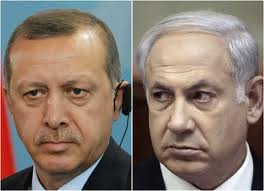
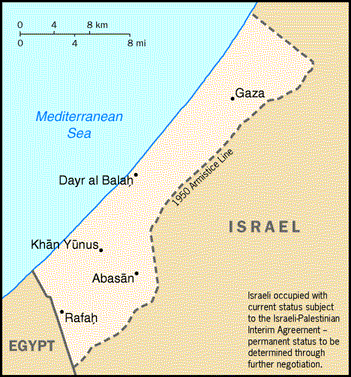
Najib Mikati1825 GMT:Turkey and Palestine. Prime Minister Recep Tayyip Erdoğan has announced that he may travel to Gaza and the West Bank in April.
The statement follows Friday's reconciliation between Ankara and West Jerusalem, with Israel’s apology for the killing of nine Turkish citizens on the Gaza Freedom Flotilla in May 2010.
“I may eventually visit Gaza and the West Bank in April. This visit would take place in the context of a general effort to contribute to the resolution process [of the Palestinian issue],” Erdoğan told reporters.
1755 GMT:Bahrain. Security forces have fired tear gas to prevent protesters from reaching the house of Nabeel Rajab, the imprisoned head of the Bahrain Center for Human Rights.
Riot police clashed with hundreds of people marching for Rajab, sentenced to two years in prison on charges of backing “illegal” protests.
Authorities also set up roadblocks to keep cars from reaching the house.
2002 GMT:Lebanon. The statement of Prime Minister Najib Mikati as he resigned, citing divisions on key issues and calling for the formation of a national unity government: "I announce the resignation of the government, hoping that this will open the way for the major political blocs to take responsibility and come together to bring Lebanon out of the unknown."
President Obama spoke in Jerusalem, to a largely-student audience, on Thursday.
Perhaps in line with my cynicism about any substance on this trip to Israel and Palestine, I was not moved as I heard the speech. But perhaps I am being harsh --- many others saw this as a forthright speech, asking the Israeli people to press their leaders for movement on the Palestine issued.
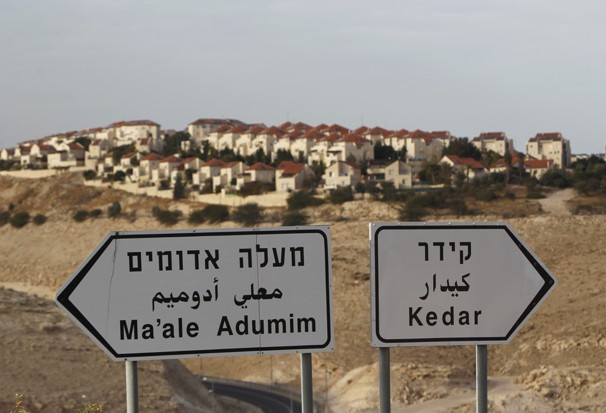
In particular, this passage raised attention, as a sign that Obama will push the Israeli leadership to act on the Jewish settlements and military occupation that are blocking progress:
the Palestinian people’s right to self-determination and justice must also be recognized. Put yourself in their shoes – look at the world through their eyes. It is not fair that a Palestinian child cannot grow up in a state of her own, and lives with the presence of a foreign army that controls the movements of her parents every single day. It is not just when settler violence against Palestinians goes unpunished. It is not right to prevent Palestinians from farming their lands; to restrict a student’s ability to move around the West Bank; or to displace Palestinian families from their home. Neither occupation nor expulsion is the answer. Just as Israelis built a state in their homeland, Palestinians have a right to be a free people in their own land.
I am still withholding judgement. Attention to this section overlooks other parts of the Obama speech, including one which effectively told the Palestinians that they cannot press their case outside a US-supported "peace process". Signficantly, the President slapped down the successful Palestinian attempt to get Observer State recogntion at the UN: "The United States will oppose unilateral efforts to bypass negotiations through the United Nations."
Yet, at the same, time, Obama's Secretary of State John Kerry let it be known that Washington will not lead any attempt to revive that peace process.
So how will Obama's words be translated into meaningful action after he leaves Israel and Palestine today?
A five-minute forecast, filmed just before President Obama arrived in West Jerusalem, of his visit to Israel and Palestine....
So far I think I've got it right: "President Obama will not have the political will --- I might even say courage --- to do anything significant."
But there is more:
There will be very little said because the fact of the matter is that the US is no longer at the centre of these Middle East questions. The US is no longer the power that can wave a magic wand or carry out shuttle diplomacy. ...
The Israeli leaaderhip will do what it wishes to do while hoping that Washington is alongside, but not necessarily depending on it. The Palestinians will try to persist and obtain a meaningful State, even if that is a halting process, whether or not Washington supports that.