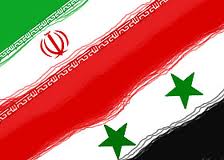





The choking off of access to essential online technology is punishing a people already subject to relentless oppression by an increasingly totalitarian system. It also signifies the larger problem of the overzealous application of supposedly "smart" sanctions that extends them far beyond their intended targets and dumbs down their effects in flagrantly counterproductive ways.
Claimed footage of Wednesday's protests near the Tehran Bazaar: "Bazaaris, support, support, support us!"
Some Iranian media posted brief reports of events --- Mehr, for example,wrote about closure of the Bazaar and clashes with police, with arrests around the Bazaar and nearby streets and squares. Further confirmation came, even as outlets offered contradictory signals about how to cope with the events. "Hard-line" sites such as Raja News played up the threat of "hooligans". Initially, the head of the Bazaar's guilds tried to play down the incident of "closed shops because of unknown elements" and said that most merchants had operated as normal; a later declaration, however, a later declaration gave up trying to minimise the situation: "Despite criticism of the government and President Ahmadinejad, we will defend the nezam (system) and the country with our lives."
As for the Government, already besieged by the economic situation and the collapsing currency, it issued the statement that a Cabinet meeting had agreed steps to control the currency market. No details were offered, however.
2010 GMT: Clerical Intervention. An extract from the statement of Grand Ayatollah Mousavi Ardebili criticising elements in the regime for letting down the people --- we are watching to see if this causes ripples in Iranian politics and society:
Now I see some deeds and outcomes and wonder if we have been negligent in our responsibilities or are culpable. When our friends were struggling, they had much higher expectations....
I want to use this opportunity to tell the honourable people of Iran, the families of martyrs, and all the people who worked hard that we stepped in this path in good faith, but perhaps we were negligent, and if any of the current problems and failures are results of my actions, I apologize to everybody....
I am speaking for myself. I am concerned about my own actions and inactions. If we all had acted appropriately, we would not have reached this situation. I am afraid that all of us, former and current officials of the country, have to apologize to the people, more so those of us that wear the cloak of spiritual leaders....
Mousavi Ardebili urged the Islamic Republic's leaders to "honestly apologise for their mistakes" without fear of the consequences, as honesty and a serious attempt at making amends would result in understanding and reconciliation.
I think in terms of media, as far as it concerns individual behaviour and even network behaviour, the Green Movement have really excelled themselves and they have truly proved that if there is a people in the Middle East who is prepared for citizen journalism, it is for sure Iranians. The Greens pushed the Persian media to a new age in which media shifts from informing to networking, deliberation and dialogue.
However, as far as it concerns big media, except at times when they conquered the BBC, they almost had no success at all! This is an important point to ponder. Structurally, the Greens claimed a space that other rivals neither paid attention to nor were interested in. Or they were missing the expertise or media resilience for it. However, with mainstream media, the predominant structures did not allow the birth of an independent Green media. This remains to be a huge obstacle.
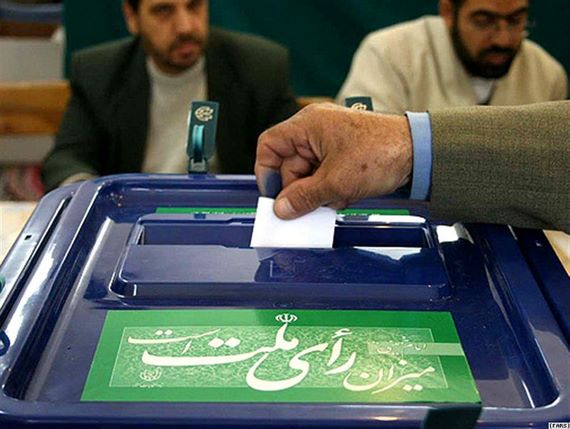
On the night of the election at the Mehr news agency, we knew that Mahmoud Ahmadinejad was not reelected because Mehr had reporters in cities across Iran and we were receiving reports every minute about the results in different cities, we knew about the votes Ahmadinejad had received and the votes that went to Mir Hossein Musavi. We even had figures about the ballot boxes from outside the country.
Around 7 p.m. when we did an approximate count of the vote, we came to the conclusion that Mir Hossein Musavi was the new president. Around 4 p.m. our reporter reported that armed Revolutionary Guards had attacked the central election office of Musavi.
Imagine, we're there covering the news and we're receiving all these reports, around 6 p.m. a friend of mine who worked at the "Iran" daily called me and said that the manager of the paper had told all the staff to come to work to prepare a special issue for the victory of Ahmadinejad -- the election process had not ended at this point.
That night was the worst night of my career, not only me but for all my colleagues -- even those who supported Ahmadinejad who were only a few at the Mehr news agency -- they could see that there was fraud.